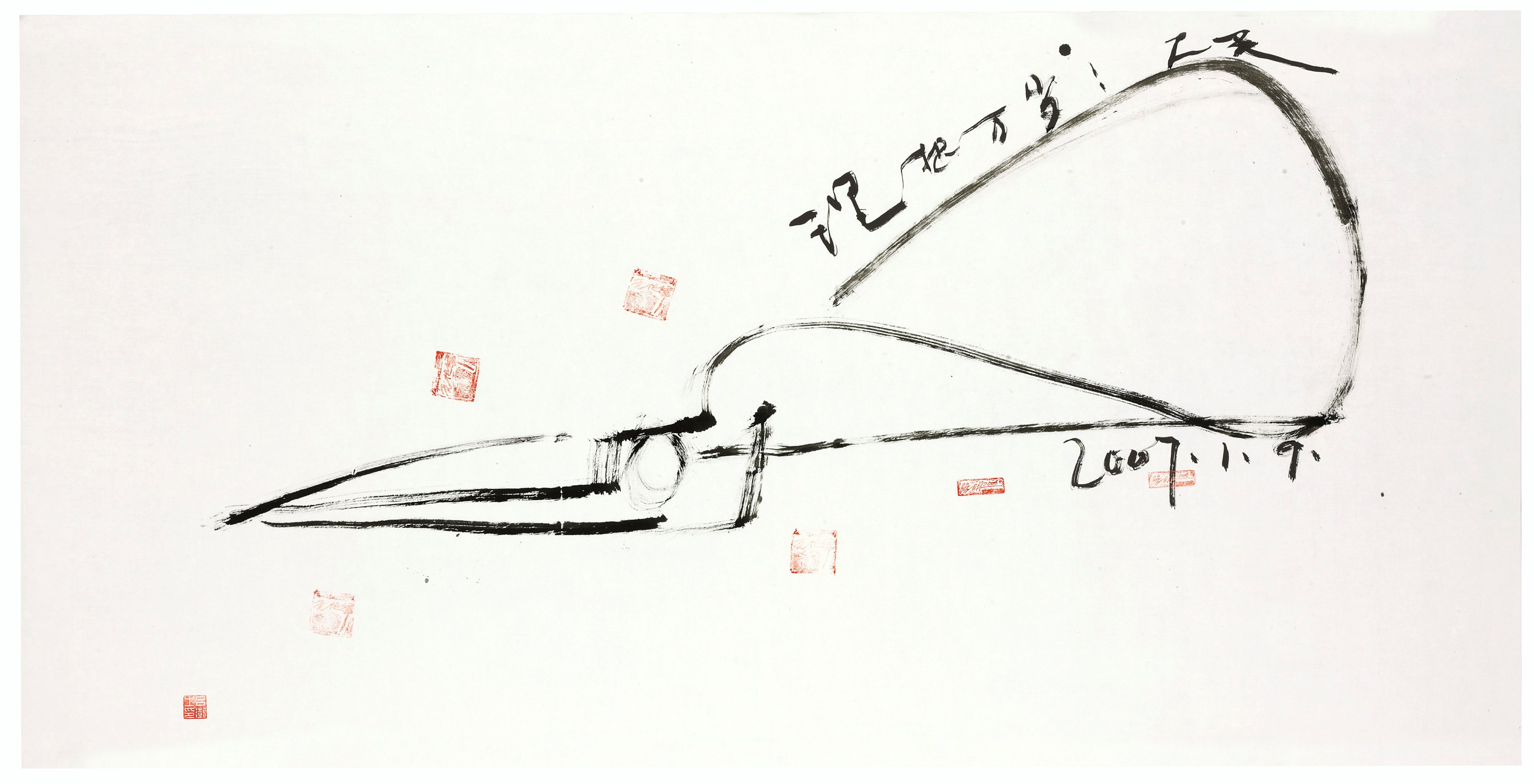
Lot 94THE SANYA COLLECTION
MAO XUHUI (b. 1956)
Scissors
Fermé8 March 2016
Prix réalisé
USD 7,500
Plus d'informations
Note du spécialiste
In 2007, the art historian and curator Lu Peng invited a group of Chinese contemporary artists including Zeng Fanzhi, Zhang Xiaogang, Zhou Chunya, Ye Yongqing, Yue Minjun, Wang Guangyi, Mao Xuhui, Wu Shanzhuan, and Zhang Peili to gather at a resort of Sanya for a ‘brush event’. The artists were asked to explore traditional medium of ink and color using brush on rice paper in reinterpreting the most recognizable themes and imageries within their oeuvre. Like the Orchid Pavilion gathering organized by Wang Xizhi in the Six Dynasties, the Sanya gathering after 1600 years brought contemporary artists together for mutual inspiration and artist creation, reviving the great literati traditional in the Chinese history.
Mao Xuhui is a leading figure in the Southwest Art Group which stemmed from the 85 New Wave Art Movement. Scissors are a signature theme in the artist’s oeuvre. Looking back through Mao’s career, between the years of 1993 to 1998, scissors were one element among many in his work. After 1998, scissors became the leading subject matter in his paintings. While scissors traditionally represent cutting off ties in a relationship, Mao Xuhui depicts the form of the scissors in profile, severing the object from its literal and symbolic meaning, allowing the inanimate object to carry emotion. In this composition, Mao adds a Chinese inscription reading “long life is the ideal,” allowing the work to recall the past through its traditional medium, but looking forward through a newly defined symbolism.
Mao Xuhui is a leading figure in the Southwest Art Group which stemmed from the 85 New Wave Art Movement. Scissors are a signature theme in the artist’s oeuvre. Looking back through Mao’s career, between the years of 1993 to 1998, scissors were one element among many in his work. After 1998, scissors became the leading subject matter in his paintings. While scissors traditionally represent cutting off ties in a relationship, Mao Xuhui depicts the form of the scissors in profile, severing the object from its literal and symbolic meaning, allowing the inanimate object to carry emotion. In this composition, Mao adds a Chinese inscription reading “long life is the ideal,” allowing the work to recall the past through its traditional medium, but looking forward through a newly defined symbolism.