Lot 92THE SANYA COLLECTION
ZENG FANZHI (B. 1964)
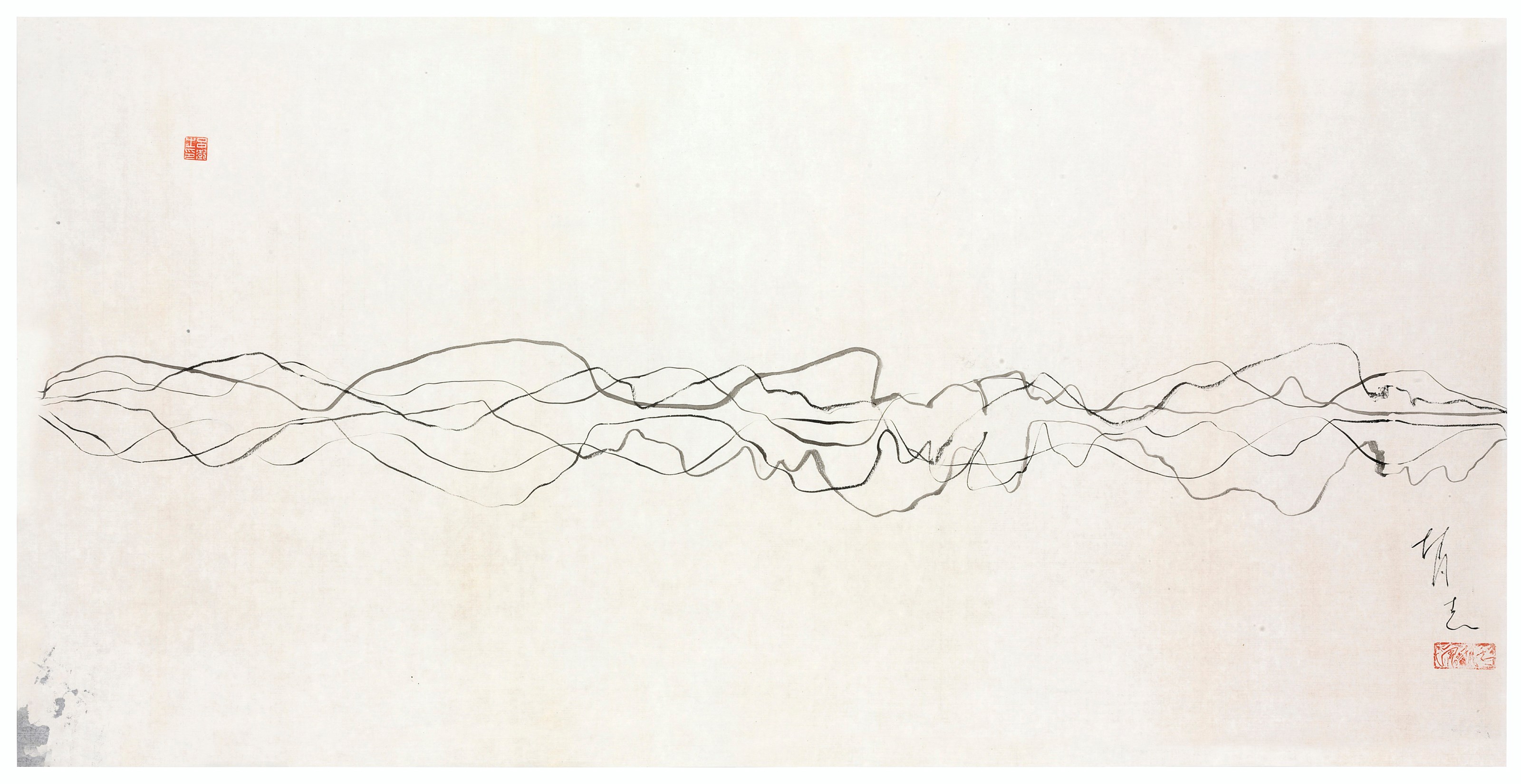
Lines
Fermé8 March 2016
Prix réalisé
USD 32,500
Plus d'informations
Note du spécialiste
In 2007, the art historian and curator Lu Peng invited a group of Chinese contemporary artists including Zeng Fanzhi, Zhang Xiaogang, Zhou Chunya, Ye Yongqing, Yue Minjun, Wang Guangyi, Mao Xuhui, Wu Shanzhuan, and Zhang Peili to gather at a resort of Sanya for a ‘brush event’. The artists were asked to explore traditional medium of ink and color using brush on rice paper in reinterpreting the most recognizable themes and imageries within their oeuvre. Like the Orchid Pavilion gathering organized by Wang Xizhi in the Six Dynasties, the Sanya gathering after 1600 years brought contemporary artists together for mutual inspiration and artist creation, reviving the great literati traditional in the Chinese history.
Zeng Fanzhi is one of China's most highly regarded expressionist painters. In 2004, the artist injured his right hand leading him to experiment with using his left hand to paint. During this period he developed a new style of painting which sought to balance control and randomness. This work Line is an example of the style he developed in the medium of Chinese traditional ink. The waving lines that make up the composition recall a minimalistic version of Chinese traditional landscape painting-- the undulating brush strokes standing in for a fluctuating horizon of mountains and lakes. Furthermore, the idea of these “messy brushstrokes” also draws a connection to the concept of grass script, a style of calligraphy that maintains the legibility of words, but usurps the rules of writing in order to express emotion. In this painting, Zeng Fanzhi concentrates the quintessence of Chinese traditional culture in his contemporary minimal lines.
Zeng Fanzhi is one of China's most highly regarded expressionist painters. In 2004, the artist injured his right hand leading him to experiment with using his left hand to paint. During this period he developed a new style of painting which sought to balance control and randomness. This work Line is an example of the style he developed in the medium of Chinese traditional ink. The waving lines that make up the composition recall a minimalistic version of Chinese traditional landscape painting-- the undulating brush strokes standing in for a fluctuating horizon of mountains and lakes. Furthermore, the idea of these “messy brushstrokes” also draws a connection to the concept of grass script, a style of calligraphy that maintains the legibility of words, but usurps the rules of writing in order to express emotion. In this painting, Zeng Fanzhi concentrates the quintessence of Chinese traditional culture in his contemporary minimal lines.