Lot 14
ANONYMOUS (BOLIVIAN, 17TH CENTURY)
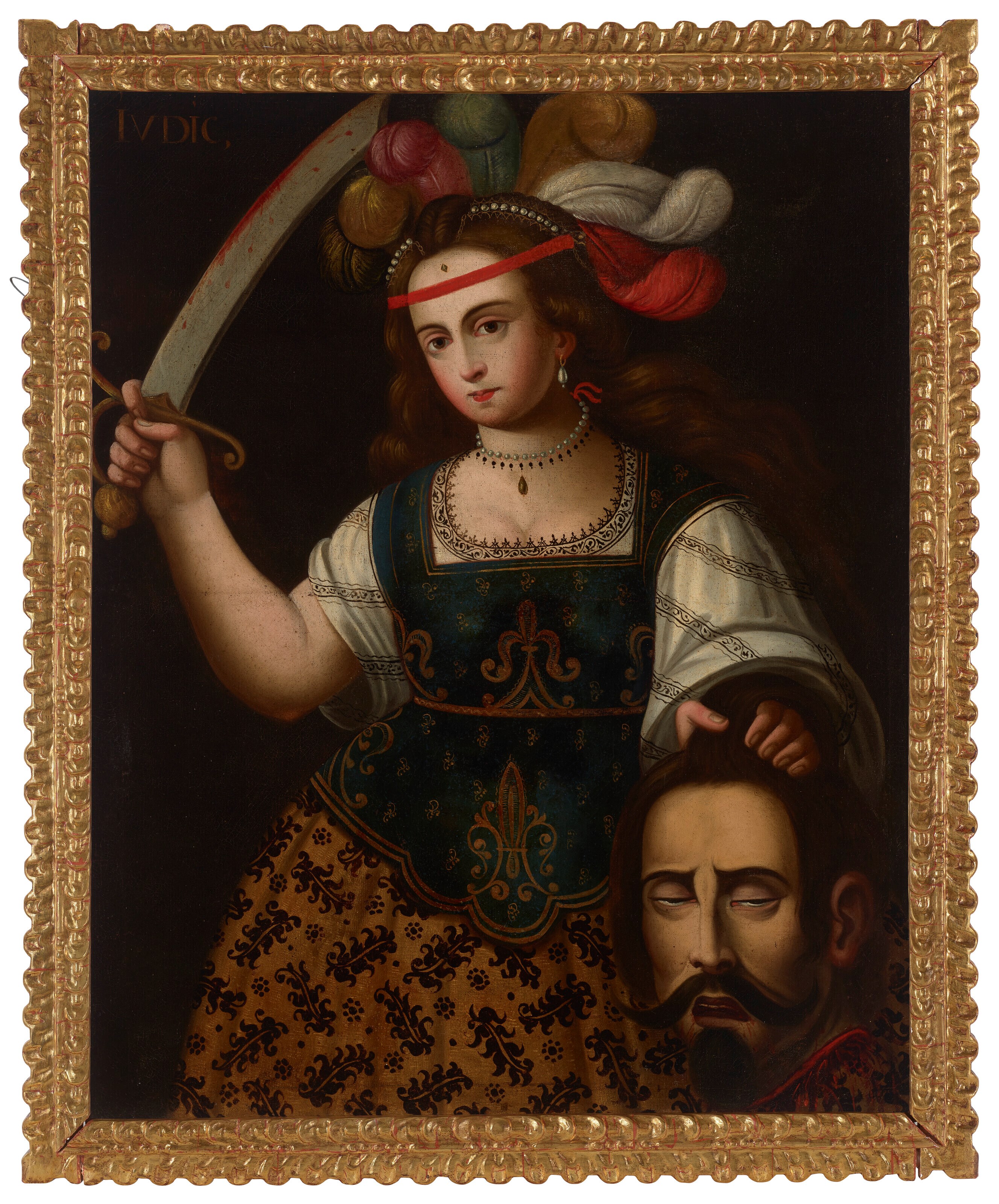
Judith y Holofernes
Closed15 March 2024
Price Realised
USD 12,600
More Information
Specialist note
The painting depicts Judith, a beautiful young widow, just after beheading Holofernes, the Assyrian general who had invaded the city of Bethulia, her home. She stands, triumphant, looking at the viewer, with her sword in her right hand and Holofernes' severed head on the left. Holofernes is depicted with the features, beard and mustache that were usually seen in the representations of the Spanish conquerors, thus adding a feature of drama and political content to the scene. This episode is taken from the Book of Judith of the Old Testament, something very rare in colonial art, which generally depicts scenes from the New Testament.
It represents the victory of a courageous woman (a topic not at all usual in colonial painting, and particularly relevant in the current perspective of feminist vindication), who saved her people from the siege of the invading troops.
She is a heroine proposed as a model of behavior, even if she obtains her victory using her "woman’s weapons" through deception, taking advantage of the enemy’s vices.
Judith is one of the "virtuous women" according to the Bible, an example of a heroic woman who defended her people from the scourge of slavery.