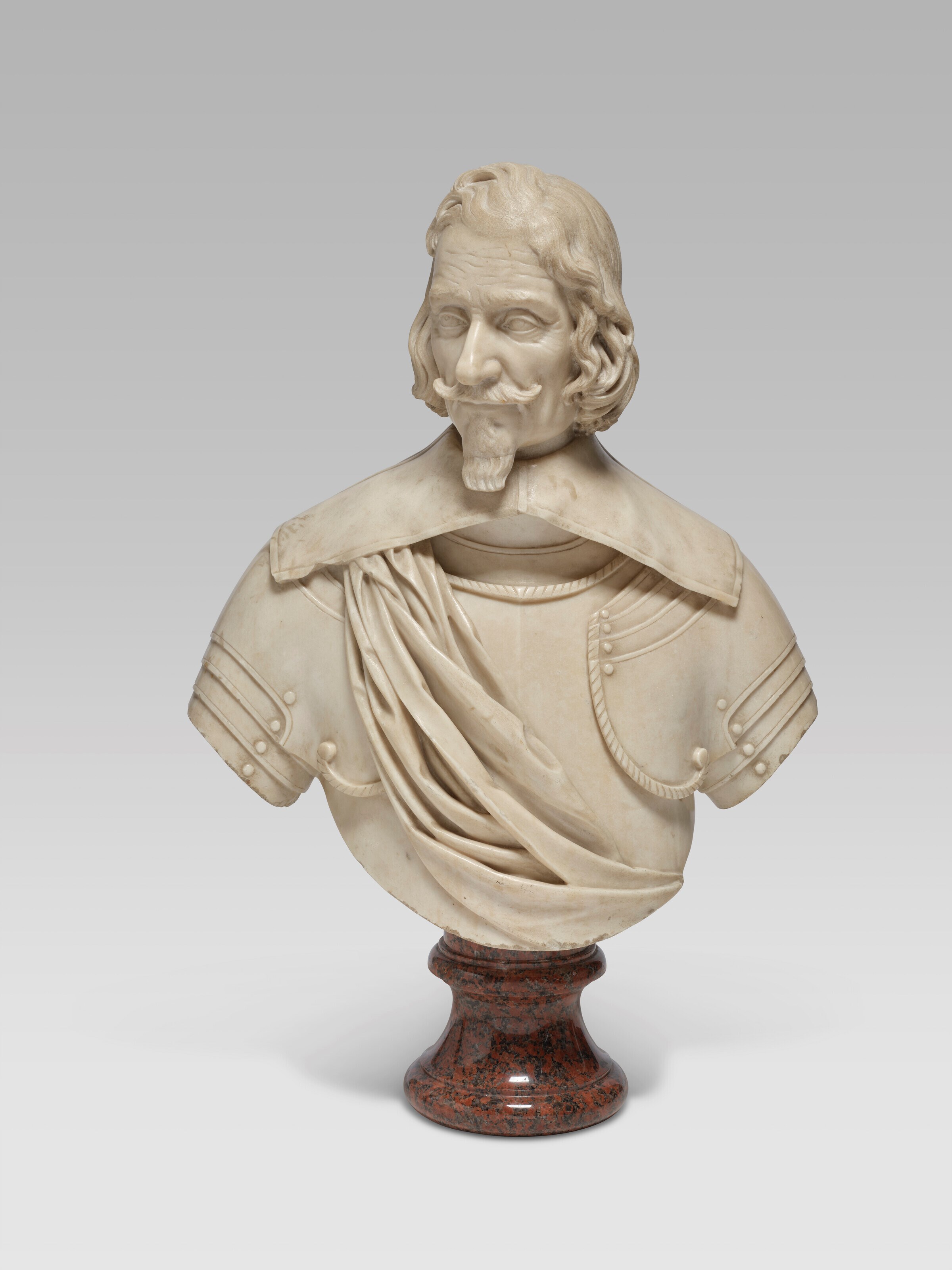
Lot 108
ATTRIBUITO A GIULIANO FINELLI (1601-1653), 1640 C.
Busto di gentiluomo
Closed7 June 2023
Price Realised
EUR 27,720
More Information
Specialist note
Giuliano Finelli (1601/2-1653) fu uno dei più talentuosi scultori di marmo del XVII secolo. Ha iniziato il suo apprendistato sotto la direzione di suo zio, scalpellino a Carrara, e ha continuato a lavorare con lo scultore napoletano Michelangelo Naccherino. Nel 1622 si trasferì a Roma ed entrò in poco tempo nell'entourage di Gianlorenzo Bernini, per il quale divenne un apprezzato assistente. Finelli è noto per aver realizzato alcuni dei dettagli più impegnativi dal punto di vista tecnico di molte opere di Bernini, tra le quali si pensi al celebre gruppo marmoreo di Apollo e Dafne (1622-24).
La bravura di Finelli come sculture risulta particolarmente evidente nei numerosi busti ritratto e figure a mezzo busto che scolpì per aristocratici italiani e membri della Chiesa. Le rappresentazioni che esplicitano i movimenti dell’animo nonché il carisma dei suoi numerosi personaggi è evidente anche in questo busto, che è paragonabile ad altre opere documentate di Finelli, tra cui il busto di Carlo Andrea Caracciolo, marchese di Torrecuso, eseguito nel 1643 (si veda Dombrowski, op. cit., n. A. 86, pp. 380-381 e fig. 140).
Giuliano Finelli (1601/2-1653) was one of the most gifted marble carvers of the 17th century. He began his training under the direction of his uncle, a stonecutter in Carrara, and continued by working under the Neapolitan sculptor Michelangelo Naccherino. In 1622 he moved to Rome and quickly entered the entourage of Gianlorenzo Bernini, for whom he became a valued assistant. Finelli is known to have executed some of the most technically challenging elements of many of Bernini’s most famous works, including the latter’s iconic marble group of Apollo and Daphne (1622-24).
Finelli’s prowess as a carver was particularly apparent in the many portrait busts and half-length figures which he carved depicting Italian aristocrats and members of the church. The animated and characterful portrayal of his many sitters is also evident in the present bust which is directly comparable to other documented works by Finelli including the bust of Carlo Andrea Caracciolo, Marquess of Torrecuso executed in 1643 (see Dombrowski, op. cit., no. A. 86, pp. 380-381 and fig. 140).