Lot 230
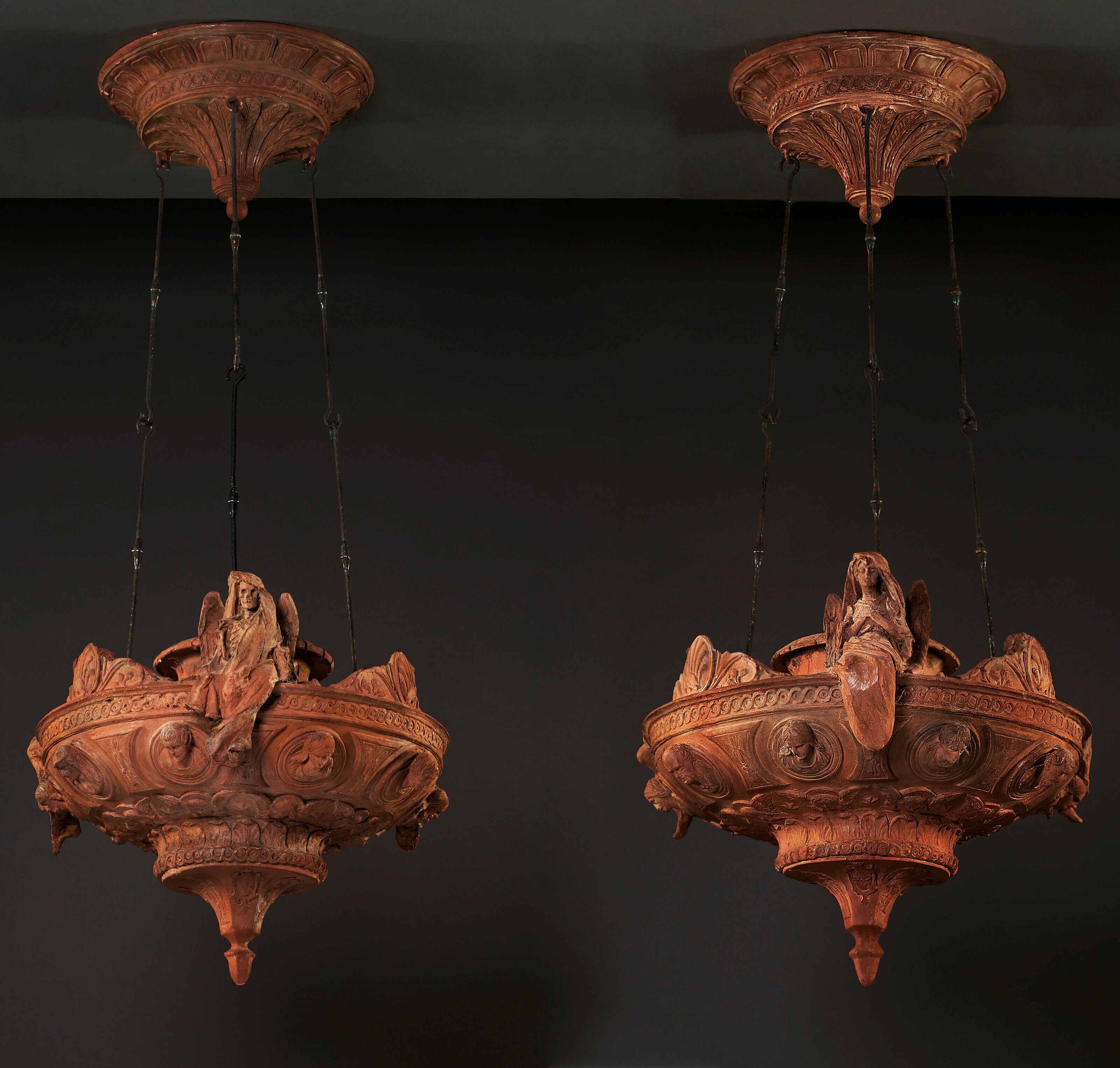
A PAIR OF FRENCH TERRACOTTA MODELS FOR SANCTUARY LAMPS
ATTRIBUTED TO BARON HENRI-JOSEPH-FRANÇOIS DE TRIQUETI, (1803-1874), FRENCH, CIRCA 1835-1844, THE UPPER SECTION APPARENTLY ORIGINAL AND RESTORED
Closed5 April 2022
Estimate
USD 20,000–30,000
More Information
Specialist note
These terracotta lamps reflect the wildly creative talents of Baron Triqueti who, although he was working for conservative clients in the rather reactionary decades of the 1830s and 1840s, managed to produce sculpture that would have looked contemporary fifty years later. The cloaked and shrouded figures resting on the edges of these lamps relate closely to some of Triqueti’s terracotta figures and designs of the period. Of particular note are the the winged angels holding musical instruments and a trumpeting angel which closely relate to the same figure on one of the present lamps (Henry de Triqueti, 1803-1874: Le sculpteur des princes, exh. cat., musée des Beaux-Arts d’Orléans and the musée Girodet, Montargis, 3 October 2007 – 6 January 2008, p. 30, nos. 18-21). Other designs for the Vase de la Chasse and its pedestal – designed for Ferdinand-Philippe, duc d’Orleans (d. 1842), circa 1835-1839, but unrealized -- also have figures on the lids of the vase and the bases of the pedestal that recall the figures on the present lamps (Ibid., pp, 42-43, nos. 40, 41 and 43).
Triqueti’s extraordinary artwork was a product of his cosmopolitan personal life and career. Born at the château de Perthuis, in the Loiret, the sculptor was the son of a Franco-Italian baron, his partner was the pioneering English sculptor Susan Durant, his son the English diplomat Sir Paul Harvey and Triqueti counted the French, English and Prussian Royal families as both clients and friends. Triqueti’s early career in France consisted of high-profile commissions largely from the d’Orléans family with his most famous being the enormous bronze doors of the église de la Madeleine in Paris (1834-41) and his tomb for the duc d’Orléans. After the fall of the July Monarchy in 1848, Triqueti’s commissions largely came from English clients culminating in his most spectacular project of all, the wall panels and tomb of Prince Albert, Queen Victoria’s husband, in the Albert Memorial Chapel at Windsor Castle. This project would consume Triqueti from 1864 until his death ten years later.
Frustratingly, the coats-of-arms on the undersides of the lamps remain unidentified. It has been suggested they are Italian, but as Triqueti worked for multiple wealthy, aristocratic and Royal families – many of whom had their own private chapels – these lamps could have been commissioned or possibly proposed by Triqueti for any of these private chapels. However the project may have started, these lamps – now to be appreciated simply as sculpture – still appear as surprising and modern as they must have appeared nearly 200 years ago.