Lot 142PROPERTY FROM A PRIVATE COLLECTION (LOTS 142 AND 146)
GIOACCHINO ASSERETO (GENOVA 1600-1650)
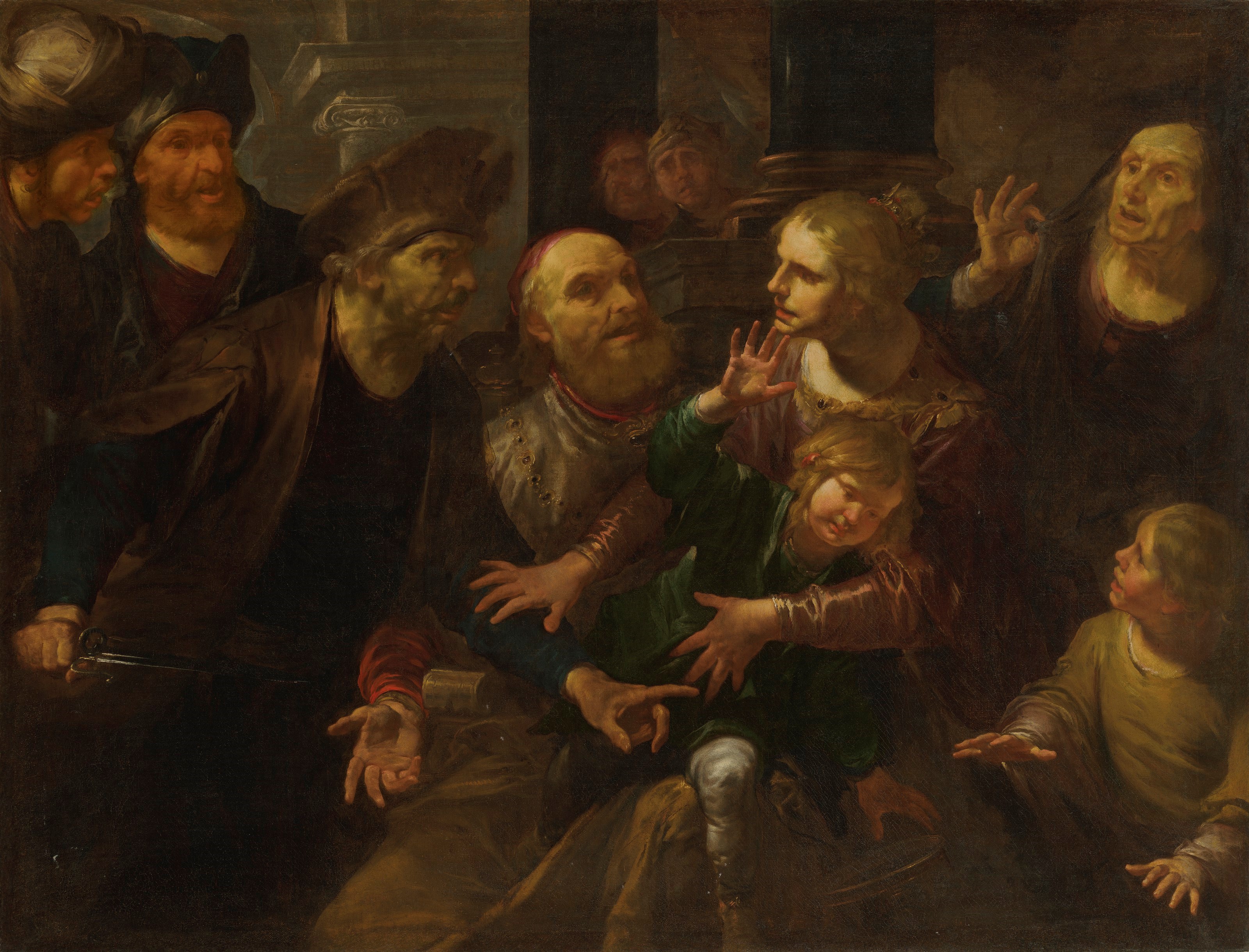
Jehoram saved from Athaliah's wrath
Closed30 July 2020
Price Realised
GBP 35,000
More Information
Specialist note
This imposing painting has often been confused with the canvas of the same subject formerly in the Zerbone collection in Genoa, and recently acquired by the Musée du Louvre, Paris. The compositional variants between the two paintings are minimal, the present one being more crowded and full of intensity. Similar in size, they both can be dated to the 1640s, at the peak of the artist’s career. The dynamic composition is enhanced by the freedom of the brushstrokes so typical of the artist in the last decade of his life: the style of his full maturity is evident in the reduced palette and the darker tonality. These characteristics demonstrate his awareness of Lombard painters of the time, who were very active for Genoese patrons, especially Giulio Cesare Procaccini, as well as his first-hand knowledge of the Roman Caravaggesque movement, after his trip to Rome in 1639.
The subject, from the second Book of Kings, is one very rarely found in Baroque paintings. Athaliah was married to Jehoram, King of Judah, who rejected Yahweh and had a turbulent reign. After his death, his son Ahaziah became king, with Athaliah on the side as Queen Mother, but he was killed after only one year in power. At the news of her son’s death, she proclaimed herself Queen of Judah, putting all the claimants to death, including her family members. However Ahaziah‘s sister was able to save one of her sons, Jeohoash, who was only one year old: she made sure he was raised in secret until he was proclaimed king six years later, ending Athaliah’s ruthless reign. This painting depicts the moment in which Jeohoash is saved from the persecution of his grandmother.
The inventory of circa 1826 of Palazzo Descalzi in Chiavari, on the Eastern coast of Liguria not far from Genoa, describes more than one hundred paintings, mainly by Baroque Genoese masters, notably the Crucifixion of Saint Peter by Caravaggio. This painting was listed together with a Samson and Delilah of similar size (whereabouts unknown; Zennaro, op. cit., no. B33).