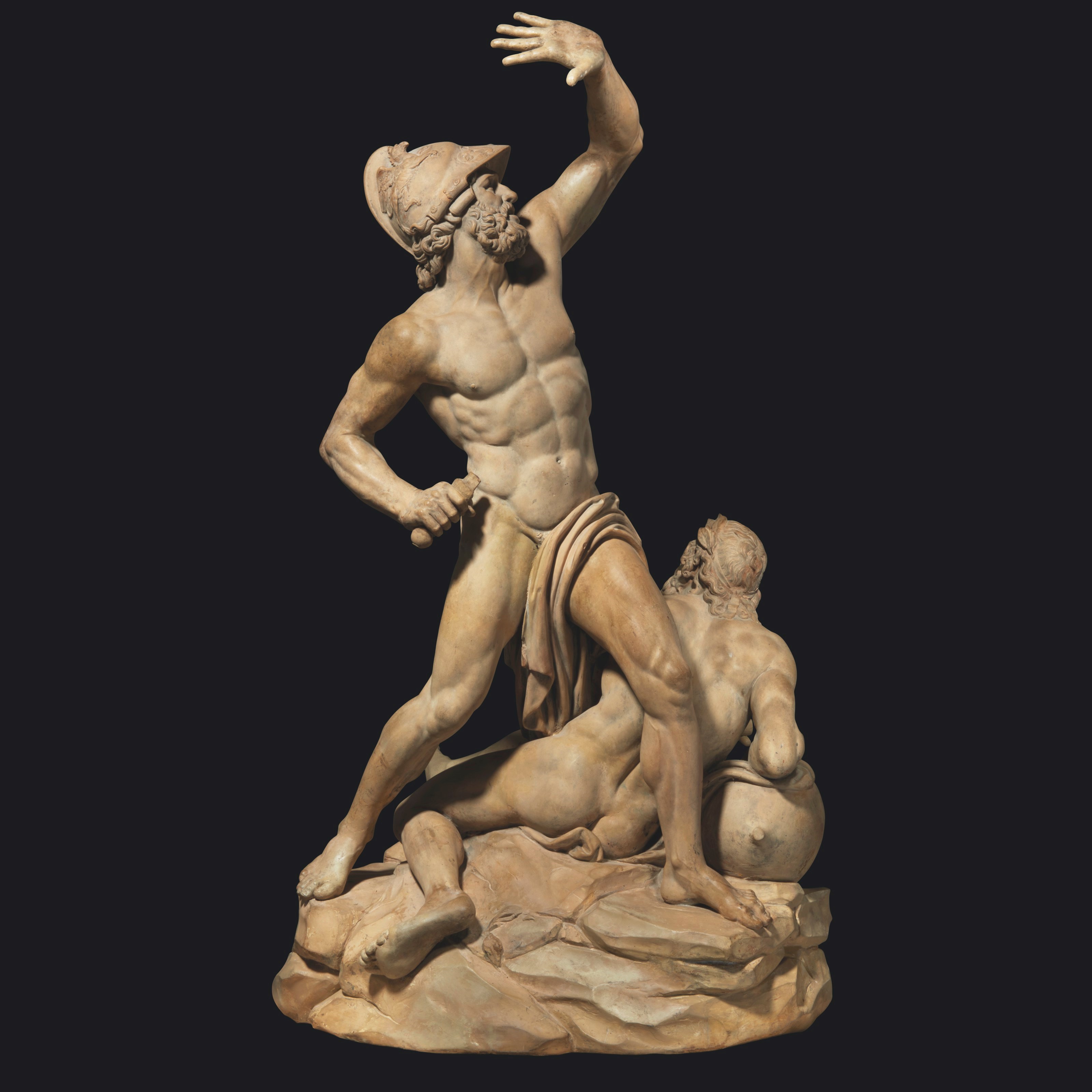
拍品 178
FRENCH, EARLY 18TH CENTURY
Two mythological male figures
已結束2021年12月8日
成交價
GBP 37,500
更多資訊
專家說明
This dramatic and large-scale work is an example of the highly finished terracottas being produced in France in the 18th century. Whether intended as a study for a marble or as a final work in itself, the theatricality of the piece clearly demonstrates that it was intended to be viewed from all sides, the viewer’s eye entertained by the continuous movement instilled in the composition.
Fascination with Greco-Roman mythological subjects was widespread in France during this period and commissions of such subjects either after antique models or as new compositions were commonplace. Whilst the idealised nude forms and attributes of the two men depicted here clearly demonstrate this work falls into this category, the story that inspired the present lot remains ambiguous. It undoubtedly represents a climactic moment in which the standing figure, his sword or dagger drawn, raises his arm above his head in a defensive gesture against a much larger foe. The inclusion of the river god at his feet could perhaps indicate that this composition was intended to represent an episode of the Iliad. During the Trojan war, the Greek hero Achilles fought with the river god Scamander who conjured huge waves to crash onto him. He was rescued by Vulcan who set a fire beneath the earth that heated the river, thus scalding the god and allowing Achilles to flee (Homer, Iliad, XXI).
Fascination with Greco-Roman mythological subjects was widespread in France during this period and commissions of such subjects either after antique models or as new compositions were commonplace. Whilst the idealised nude forms and attributes of the two men depicted here clearly demonstrate this work falls into this category, the story that inspired the present lot remains ambiguous. It undoubtedly represents a climactic moment in which the standing figure, his sword or dagger drawn, raises his arm above his head in a defensive gesture against a much larger foe. The inclusion of the river god at his feet could perhaps indicate that this composition was intended to represent an episode of the Iliad. During the Trojan war, the Greek hero Achilles fought with the river god Scamander who conjured huge waves to crash onto him. He was rescued by Vulcan who set a fire beneath the earth that heated the river, thus scalding the god and allowing Achilles to flee (Homer, Iliad, XXI).