拍品 202
DUTCH SCHOOL, 18TH CENTURY
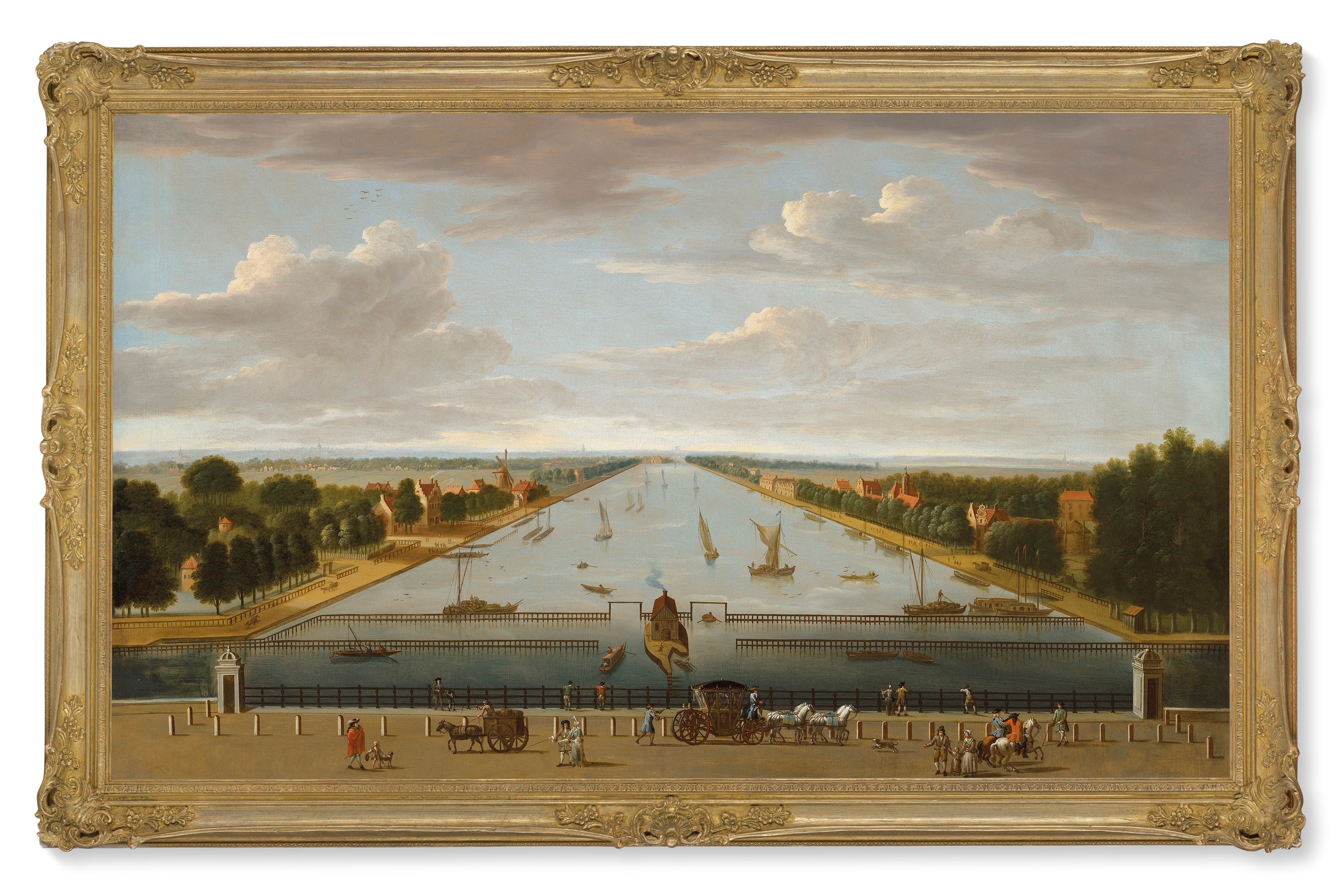
The Amstel from the Hogesluis facing South
已結束2021年7月9日
成交價
GBP 18,750
更多資訊
專家說明
As one of the most impressive depictions of this specific view of the Amstel, the initial composition was likely invented by Abraham Rademaker (1677-1735) in a drawing now at the Crocker Art Museum, Sacramento, California, which Charles Dumas has dated to between 1720 and 1730 (private communication, July 2019). The composition was subsequently adapted into a print by Matthijs Pool (1676–1740) with variations on Rademaker’s original (Rijksmuseum, Amsterdam), and in two further prints after his designs for a collection of views of the Amstel titled Hollands Arcadia, published in 1730 by Leonardus Schenk (1696-1767). While the identity of the present painter is unknown, the mastery of his draughtsmanship is reflected in each element of the composition, which he based largely on Pool’s print and the subsequent print variations, reproducing details in paint with equal precision yet in a grander format. Given its similitude to Pool’s print, it is possible that the work was conceived in around the same period, between 1720 and 1730.
Depicting the Amstel from the Hogesluis in a southerly direction, this picture acts as an important and vivid record of contemporary life in eighteenth-century Amsterdam, representing three buildings that would be destroyed at the end of the eighteenth century: on the left the Weesperzijde with the Lokhorst tavern and the De IJsbreker inn, and on the right, the De Berebijt tavern, named after the bear fights that were held there.
Depicting the Amstel from the Hogesluis in a southerly direction, this picture acts as an important and vivid record of contemporary life in eighteenth-century Amsterdam, representing three buildings that would be destroyed at the end of the eighteenth century: on the left the Weesperzijde with the Lokhorst tavern and the De IJsbreker inn, and on the right, the De Berebijt tavern, named after the bear fights that were held there.