拍品 49PROPERTY FROM THE COLLECTION OF THE ARTIST'S FAMILY
Hamed Ewais (Egyptian, 1919-2011)
Docks
已結束2020年11月24日
成交價
GBP 62,500
更多資訊
專家說明
A pioneer of Egyptian social realism, modern artist Hamed Ewais depicts in his work the embodiment of the Egyptian working class and the evolving revolutionary sprit post 1952 under President Gamel Abdel Nasser’s Pan-Arab regime. Ewais’ subjects are larger-than-life, thick-boned peasants, fisherman, labourers and factory workers, figures who would serve the nation on their path to national development. Ewais’ distinctive style evokes the personification of strength in his depictions of muscular figures within his compositions. The present two works are strong examples from the early 1960s, created by the artist at the pinnacle of Nasser's and Egypt's political and social success.
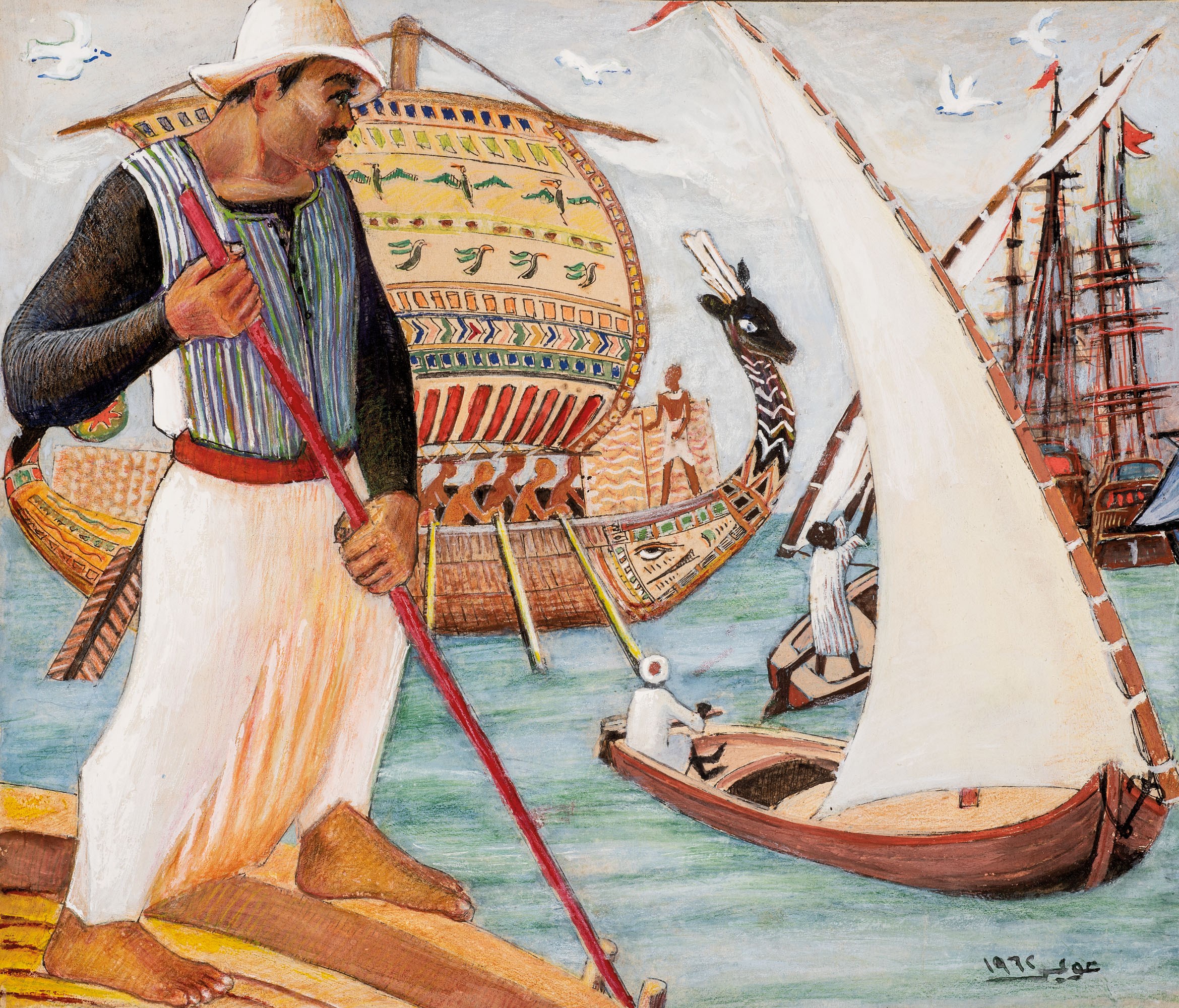
Docks, 1962 encompasses all the elements traditionally found in Ewais’ works that incorporate Egyptian life and society. Portraying the strength of fishermen and their importance to the city of Alexandria, the artist was influenced by the light and vibrant colours of its Mediterranean port, where Ewais had settled and raised his family. The work is also a detailed drawing which featured as part of a mural executed in 1963 at the passenger terminal of the Office of the General Company for Maritime Navigation, Alexandria. The scene is a multi-layered composition, with an extensive use of segmenting the alternate directions of the boats depicted. In the background, one of the featured boats is heavily symbolic with pharaonic references, emblematic of the origins of man, industrial strength and resilience.
Docks, 1962 encompasses all the elements traditionally found in Ewais’ works that incorporate Egyptian life and society. Portraying the strength of fishermen and their importance to the city of Alexandria, the artist was influenced by the light and vibrant colours of its Mediterranean port, where Ewais had settled and raised his family. The work is also a detailed drawing which featured as part of a mural executed in 1963 at the passenger terminal of the Office of the General Company for Maritime Navigation, Alexandria. The scene is a multi-layered composition, with an extensive use of segmenting the alternate directions of the boats depicted. In the background, one of the featured boats is heavily symbolic with pharaonic references, emblematic of the origins of man, industrial strength and resilience.