拍品 6PROPERTY FROM A PRIVATE COLLECTION
Bahman Mohasses (Iranian, 1931-2010)
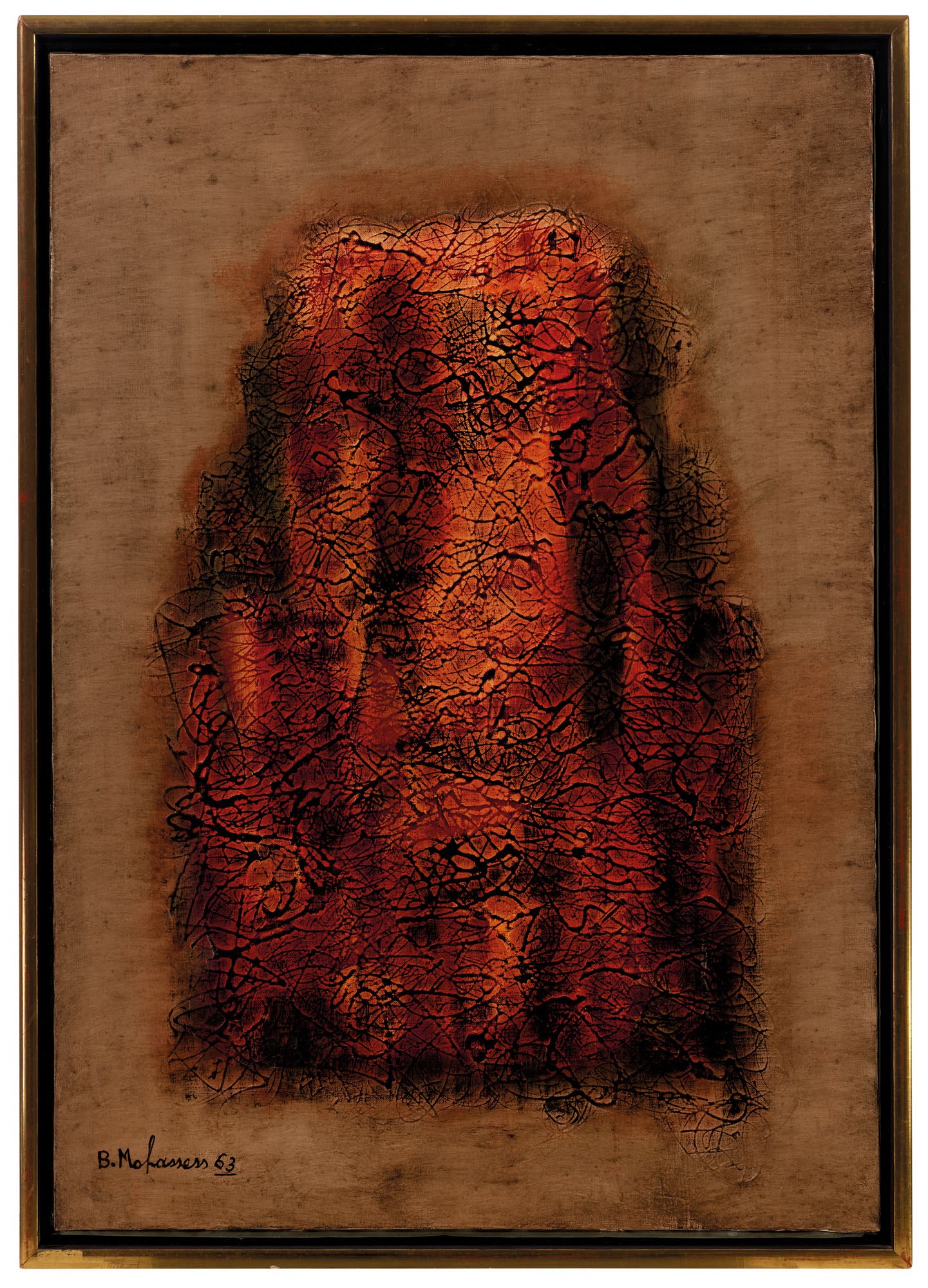
Apprizione
已結束2020年11月24日
成交價
GBP 16,250
更多資訊
專家說明
A modern master of the Iranian art scene, known for his dystopic, dreamlike compositions of quasi-human, abstracted figures, Bahman Mohasses' works border on the autobiographical and explore concepts of fragments, waste and ruins, as he reflected upon classical antiquity and Renaissance themes. Throughout his life, Mohasses chose to live on the periphery and the ‘liminal spaces’ between Italy and Iran, the public and private. Choosing to destroy his works and avoiding mass public exposure, his compositions are overwhelmed by raw aesthetics and anguish within an expansive oeuvre that spans painting, sculpture and printmaking, informed by Western modern art history. Demons, faceless bodies mediating between human and the otherworldly are contrasted with still lifes that utter notions of fear and hopelessness, attempting to glorify the beauty within the deformities.
The mid-1960s to the early 1970s was a prolific period for Mohasses, during which he depicted mythological characters while absorbing European art. Attending the Fine Art Academy in Rome in 1954, where he studied under Ferruccio Ferrazzi, the artist was also exposed to the works of Giacometti, Dali and Marini and Renaissance painting. Apprizione (translated to ‘Apparition’) from 1966 is a captivating and symbolic composition depicting a ghostlike character painted with spontaneous, unrestrained gestural strokes. Executed when the artist returned to Iran during the early 1960s, the work was produced just prior his departure from abstraction and represents a pivotal moment for the artist. While the apparition appears subtle within the composition, it is undefined, and hovers within a liminal existence between the figurative and abstraction.
Upon his return to Tehran, Mohasses was invited to participate at the Venice, São Paulo and Tehran Biennales and directed plays, including Pirandello's Henry IV at the Goethe Institute and Ghandriz Hall in Tehran. While Mohasses eventually settled in Italy following the coup against Mossadegh in 1953 and the Cultural Revolution that followed, his works reveal a deep attachment to Iran.