拍品 10Christie’s is delighted to work with UniCredit managing the sale of some of the bank’s artworks from Austria, Germany and Italy. The proceeds will be primarily used to support the Group’s Social Impact Banking (SIB) initiatives. The remaining balance will be dedicated to other relevant projects, including the local support of young artists. In addition, UniCredit will also look to replace the masterpieces sold with works of young and emerging artists. The artworks are being offered at various Christie’s international salerooms across a range of marquee week sales that started in 2019 and are continuing throughout 2020.
Social Impact Banking is part of UniCredit’s commitment to building a fairer and more inclusive society. It aims to identify, finance and promote people and companies that can have a positive social impact. As well as continuing to provide credit to projects and organisations not usually served by the traditional banking sector, UniCredit employees educate micro-entrepreneurs, social enterprises and vulnerable or disadvantaged groups, building valuable networks within our communities. SIB also focuses on monitoring and measuring outcomes, essential for sustainable growth. In 2019 it was rolled out in 10 additional UniCredit markets.
ART FOR FUTURE – SELECTED WORKS FROM THE UNICREDIT GROUP
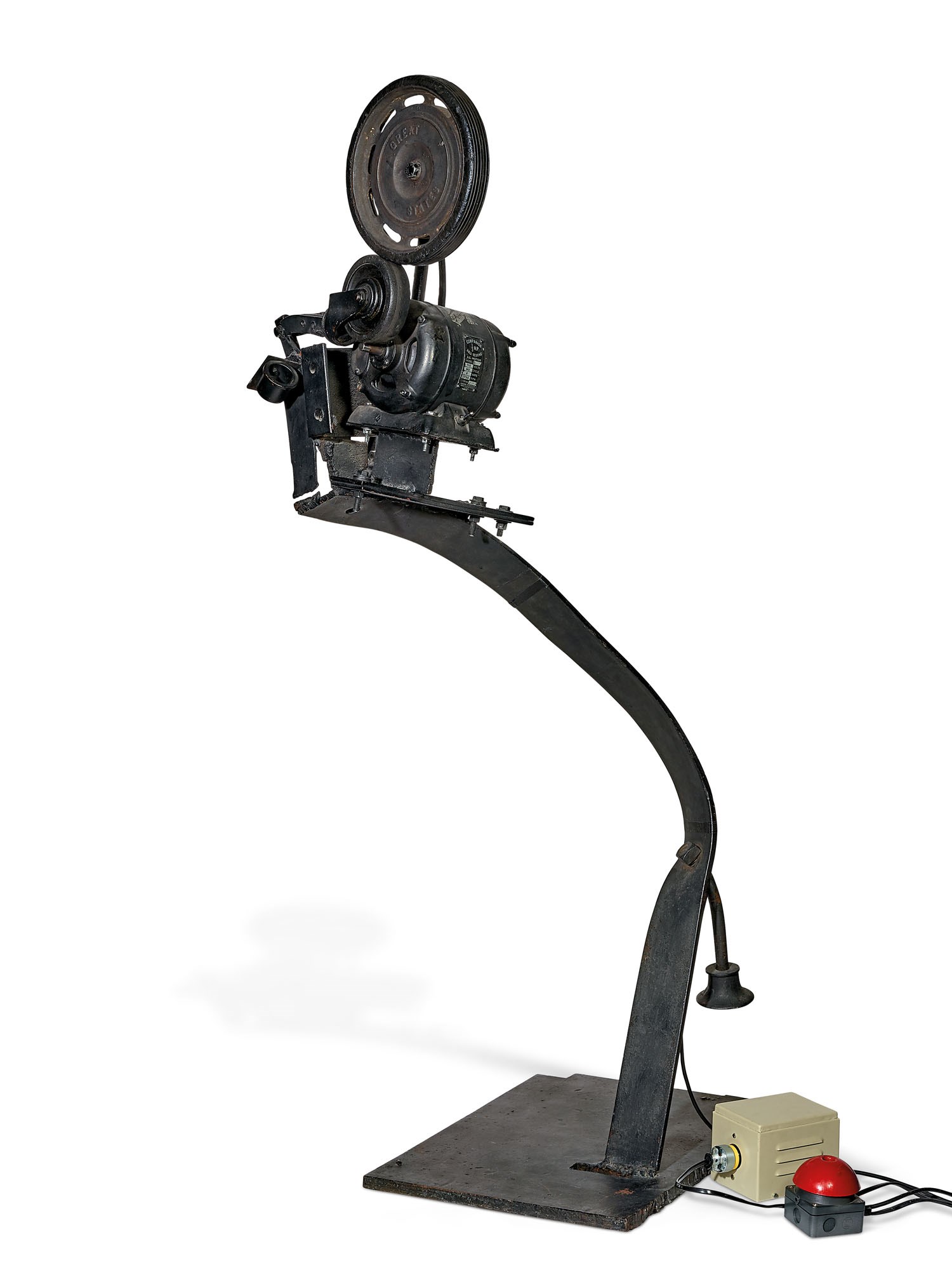
JEAN TINGUELY (1925-1991)
Bandini
已結束2020年9月29日
成交價
CHF 75,000
更多資訊
專家說明
Executed in 1963, Bandini is an early example of Jean Tinguely’s celebrated machine sculptures. Also known as ‘metamechanics’, these works defined his output, addressing the relationship between technology and aesthetics during a time of rapid global change. Tinguely was part of the ‘Nouveau Réaliste’ (‘New Realist’) movement founded by Yves Klein and Pierre Restany in 1960. Contemporaneous with the evolution of Pop Art, it sought ‘new ways of perceiving the real’, building on the legacy of Marcel Duchamp by integrating art with objects from everyday life. Conceived at the height of the machine age, Tinguely’s kinetic sculptures were deliberately divorced from functionality; made from scrap materials, their playful movements called into question the nature and purpose of technological progress. The present work coincides with Tinguely’s decision to cover his sculptures in matt black paint, transforming them from raw, industrial apparitions to sleek, otherworldly beings, riddled with curious anthropomorphic charge.