拍品 69FROM THE ESTATE OF AN IMPORTANT GERMAN COLLECTOR
Ulrich Rückriem (b. 1938)
Tempel
已結束2020年6月18日
成交價
EUR 118,750
更多資訊
專家說明
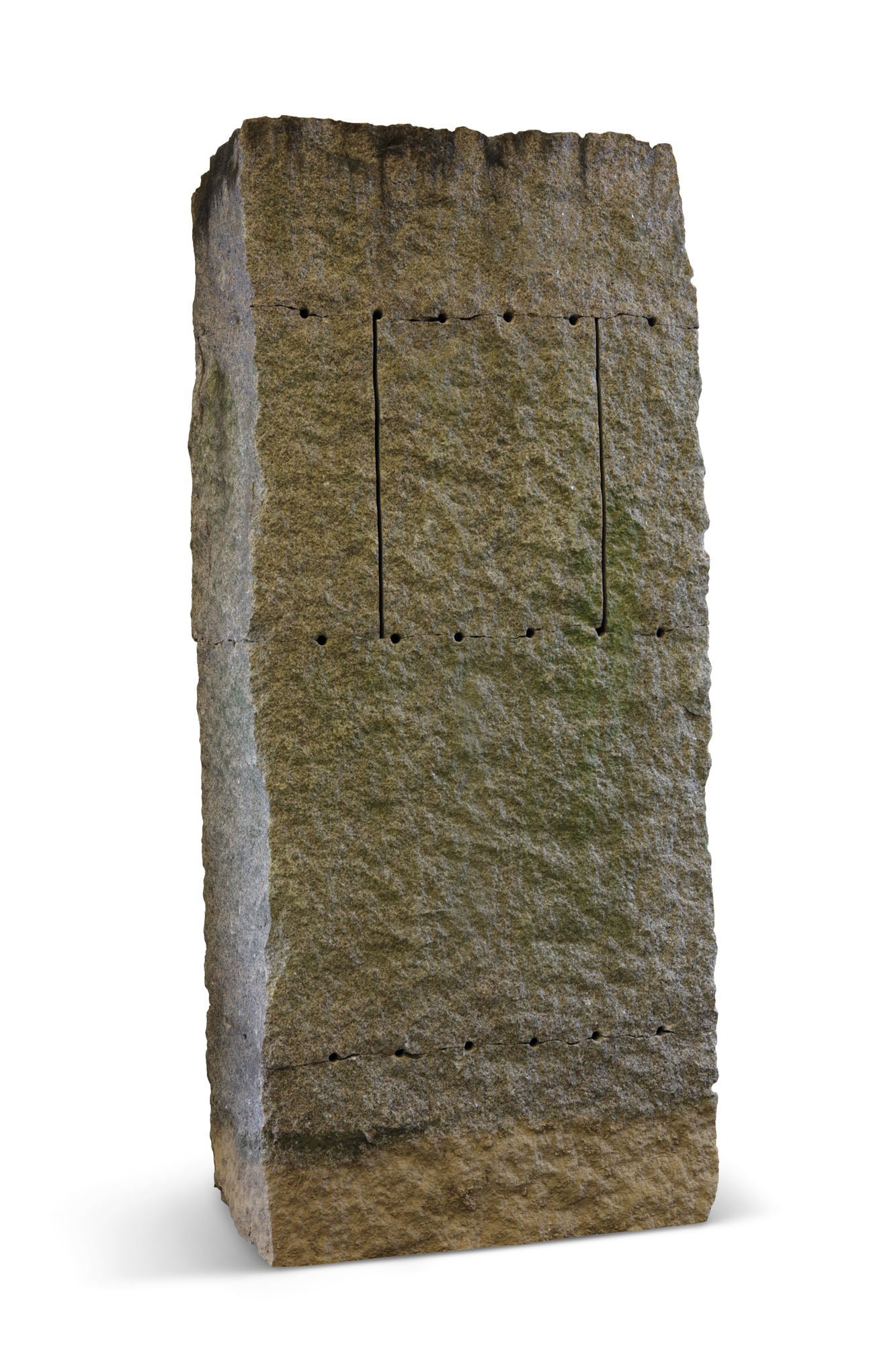
Standing two and a half metres tall, Tempel is a totemic example of Ulrich Rückriem’s celebrated stone sculptures. Executed in 1986, its rough-hewn granite surface is incised with a pattern of holes and vertical incisions, imbuing its solid, monumental form with a sense of otherworldly mystery. Light penetrates its interior and dances across its external planes, illuminating its natural crevices, textures and warm earthbound hues. Its title evokes notions of ritual and worship, positing the work as an elemental shrine to abstract geometric beauty. In this regard, it might be said to refer back to the artist’s beginnings as a stonemason in the Dombauhütte at Cologne Cathedral, where he worked between 1959 and 1961. Towering before the viewer, it appears simultaneously ancient and contemporary: a monument to the overarching principles of structure and order that govern both art and nature.
Rückriem came to prominence in the 1960s, abandoning his work as a stone cutter in order to practise independently as an artist. He was deeply influenced by his encounters with Minimalists such as Carl Andre, Richard Long, Sol LeWitt and Blinky Palermo, with whom he shared a studio. Though many of his early works comprised portraits carved from wood and stone, he became increasingly fascinated by abstract forms, cutting and reassembling his raw materials to create visions of structural rigour. He was particularly interested in the interaction between his works and their environment, creating public installations in rural and urban locations throughout Europe. As well as espousing the aesthetics of Minimalism, Rückriem also adhered to the notion of art as process, embracing methodical drawing and planning as an integral part of his practice. ‘Work processes should remain visible and their traces not be erased by subsequent interventions’, he has explained. ‘My working of the material determines the nature of the object and its relationship to its new surroundings’ (U. Rückriem, quoted at https://www.annelyjudafineart.co.uk/exhibitions/ulrich-rueckriem [accessed 5 May 2020]).
Rückriem came to prominence in the 1960s, abandoning his work as a stone cutter in order to practise independently as an artist. He was deeply influenced by his encounters with Minimalists such as Carl Andre, Richard Long, Sol LeWitt and Blinky Palermo, with whom he shared a studio. Though many of his early works comprised portraits carved from wood and stone, he became increasingly fascinated by abstract forms, cutting and reassembling his raw materials to create visions of structural rigour. He was particularly interested in the interaction between his works and their environment, creating public installations in rural and urban locations throughout Europe. As well as espousing the aesthetics of Minimalism, Rückriem also adhered to the notion of art as process, embracing methodical drawing and planning as an integral part of his practice. ‘Work processes should remain visible and their traces not be erased by subsequent interventions’, he has explained. ‘My working of the material determines the nature of the object and its relationship to its new surroundings’ (U. Rückriem, quoted at https://www.annelyjudafineart.co.uk/exhibitions/ulrich-rueckriem [accessed 5 May 2020]).