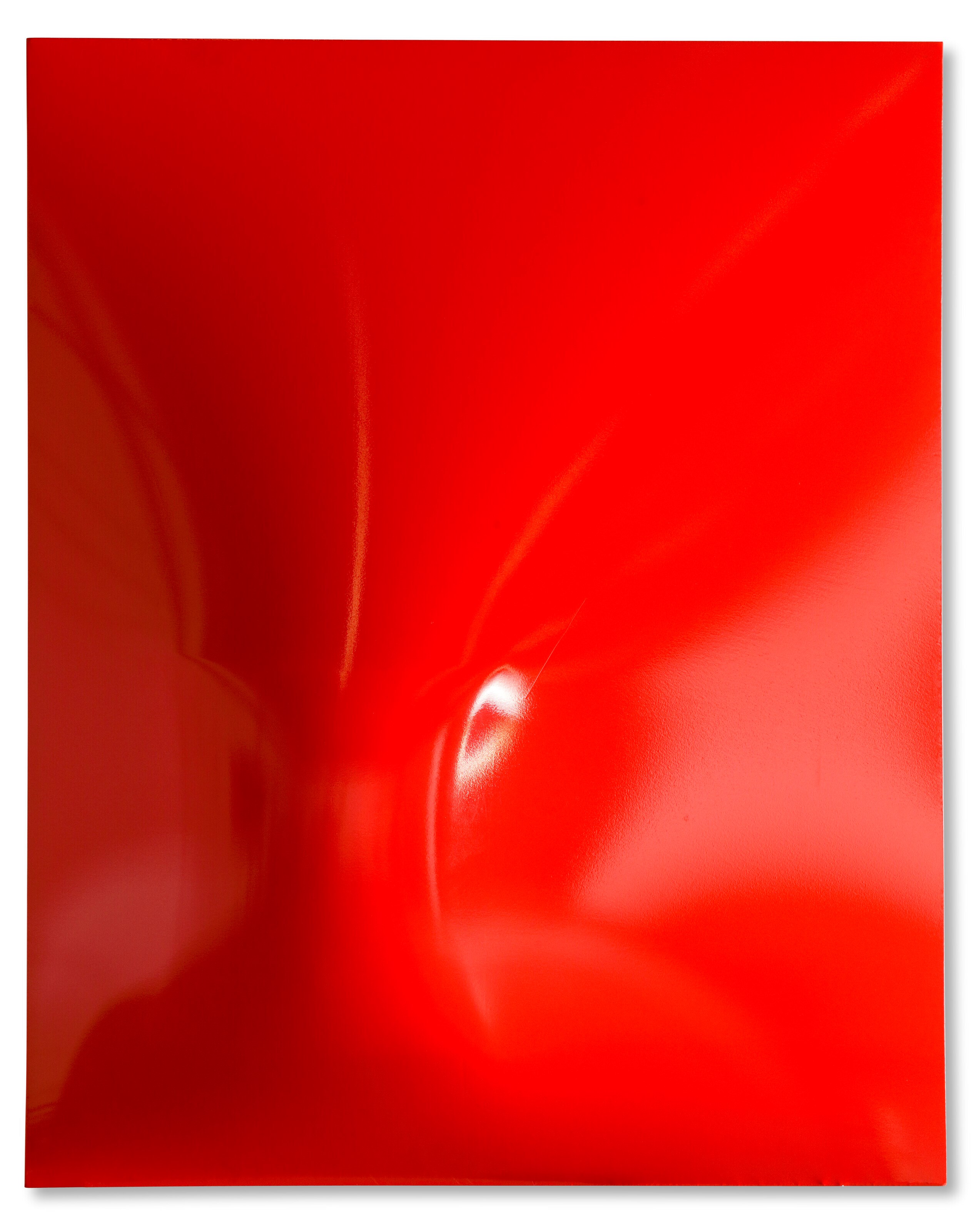
拍品 96
AGOSTINO BONALUMI (1935-2013)
Rosso
已结束2023年4月25日
成交价
EUR 47,880
更多信息
专家说明
Curving and arcing in sumptuous Ferrari red, Agostino Bonalumi’s Rosso is a beautiful example of the artist’s unmistakable series of Estroflessioni paintings—a vision of space and form both timeless and futuristic. Manipulating the surface of his canvas, Bonalumi produces gracefully rounded, abstract structures that emerge from the surface of the painting to explore the space around them; the result is a kinetic, flowing visual experience that carries the viewer around the work’s contours.
Covered in a flawlessly gleaming red ciré, the curves of the work Rosso create a powerful relief effect to the viewer. The effect of the reflection of light shapes the surface and exalts the work into an autonomous three-dimensional entity. Admiring the work, the reflections of light dance along with the glances of the spectator and the work's luminescence seems to grow out from within the painting in a strangely organic, ambiguous eruption. The structure occupies the room with a classical elegance, impressively solid—and yet its shape ultimately seems to dissolve into something less real, an imprint left on another material rather than any kind of essential substance itself. Indeed, as it curves over the edge of where the edge of the canvas should be, Bonalumi seems to be calling into question the finality and resolution of the painting itself—the definition provided by a square frame has been effaced, the edge of the painting transfigured into a cylindrical shape that we can see curve out of sight, but whose end point remains cloaked in mystery.
Born in 1935, Bonalumi was at the forefront of the exceptional wave of Italian artists who followed Lucio Fontana in the late 1950s and 1960s. Influenced by Fontana’s own spatial experiments with the canvas, Bonalumi had begun working with Enrico Castellani and Piero Manzoni as early as 1958; by the mid-1960s, Bonalumi’s reputation was perhaps higher than ever before, both internationally and at home, with strong links to Germany’s Zero artists and critics in Italy already beginning to recognise his importance—in 1966 the artist was invited to take part at the Venice Biennale for the first time.