拍品 65
ALFRED STEVENS (BELGIAN, 1823-1906)
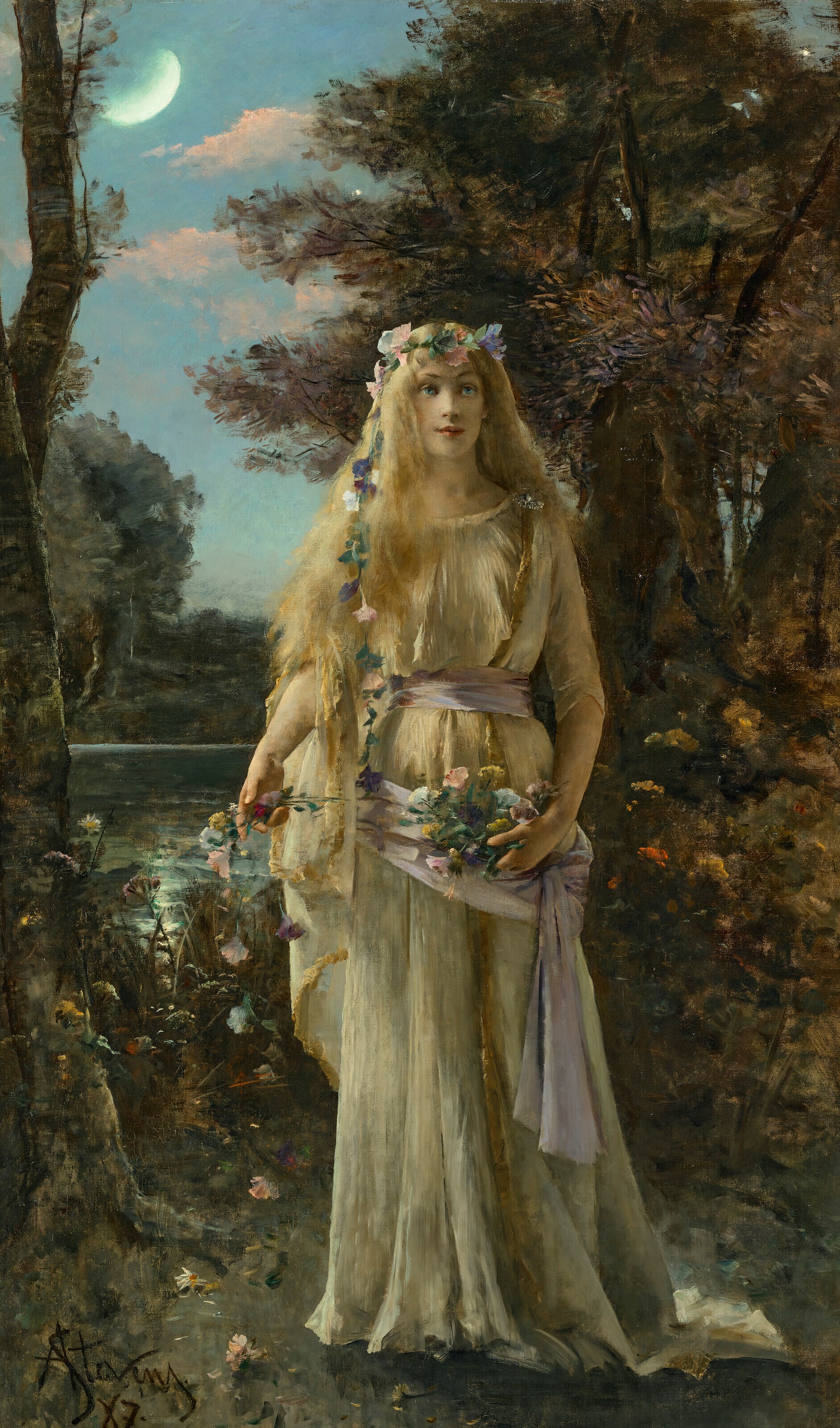
Ophélie (Ophelia)
已结束2022年7月14日
估价
GBP 60,000–100,000
更多信息
专家说明
Alfred Stevens came from a family of artists. He trained in Brussels under Francois-Joseph Navez, a pupil of Jacques-Louis David. His early work shows a debt to the Realism of Gustave Courbet and the historical subject matter of Henri Leys. He moved to Paris and achieved a reputation for his paintings of fashionable women in elegant interiors, reflecting the rich cultural mood of the last quarter of the 19th century. By the 1880s Stevens had reached the height of his career and with his reputation solid and secure his work begins to show more diversity.
The present work is part of a series of paintings of Ophelia, which Stevens painted between 1886 and 1891. Although partly influenced by the vogue for the English Pre-Raphaelites, and Stevens' close friendships within Symbolist circles, it was the artist's interest in theatre - and specifically his close friendship with the famous actress Sarah Bernhardt - which spurred him to create paintings with a literary theme. Bernhardt first met Stevens in 1873, after she determined to throw herself into painting and sculpture under his and Gustave Doré's tutelage. Bernhardt lent props - clothing, jewellery, and photographs - to the older Stevens, from which he created female portraits loosely inspired by his muse. Stevens went on to paint her in a variety of Shakespearean roles, painting, at rehearsals or in her dressing room. The costume in the present work was used as a model by Bernhardt in a later production of Hamlet.
Ophelia is posed and dramatically lit in front of an elaborate backdrop as if before an audience. She is portrayed isolated, strewn with flowers, a symbolist figure reminiscent of Botticelli's Primavera. She wanders towards the water, driven insane by the murder of her father by her lover Hamlet.
We are grateful to the Comité Alfred Stevens for confirming the authenticity of this work on the basis of digital images. The work is accompanied by a certificate from the Comité Alfred Stevens and will be included in their forthcoming Alfred Stevens catalogue raisonné, now in preparation.