拍品 36
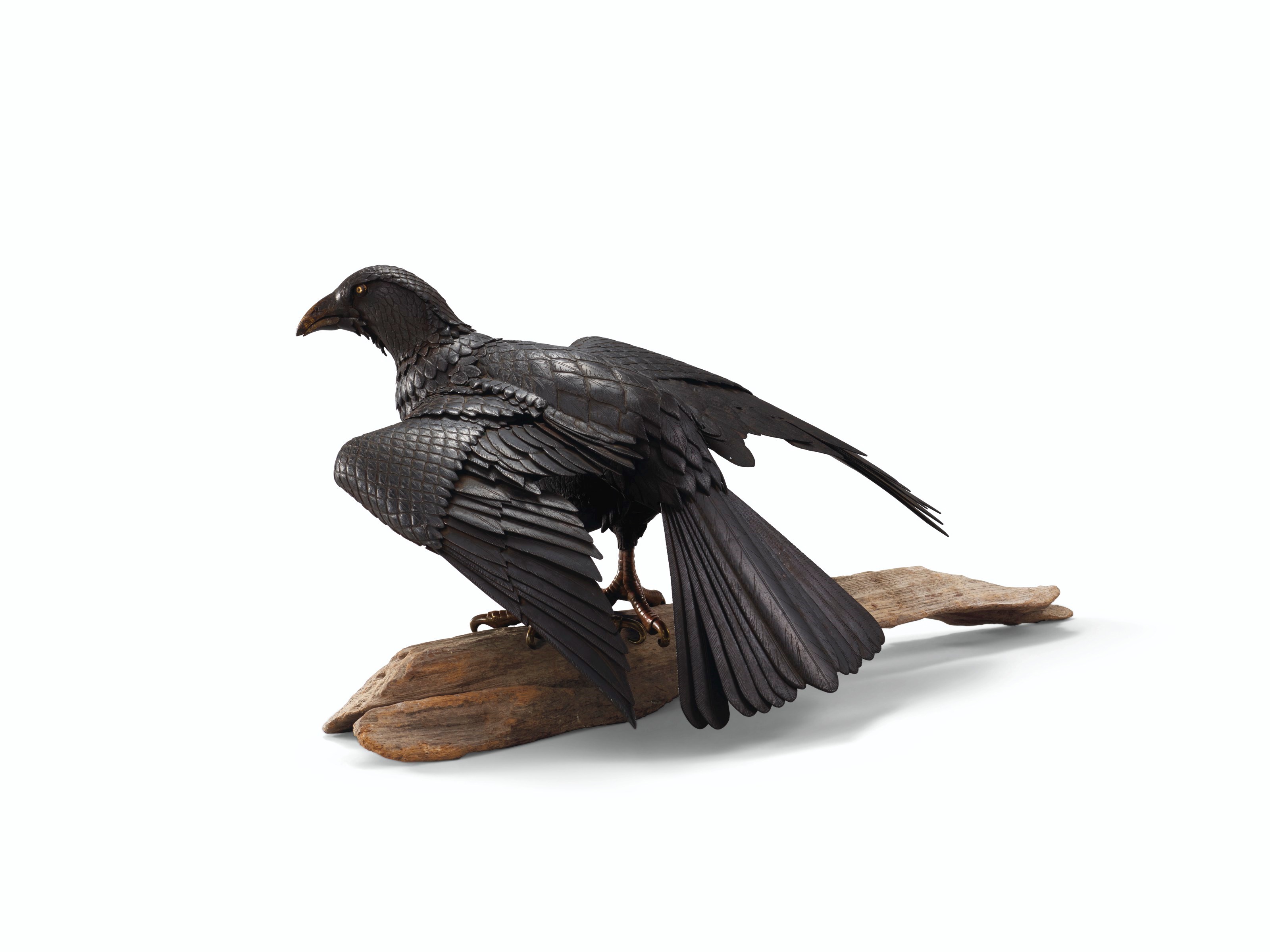
AN IRON ARTICULATED SCULPTURE OF A CROW
EDO PERIOD (19TH CENTURY), SIGNED MYOCHIN MUNEHARU
已结束2020年7月23日
成交价
USD 100,000
更多信息
专家说明
Ingenious movable sculptures of animals are the invention of Japanese metalsmiths trained in the manufacture of samurai armor. The Myochin family of armorers is credited with the first sculptures of this type in the eighteenth century. In relative peacetime, the demand for arms and armor, except for display purposes, had slowed. To meet the changes in demand, the Myochin expanded their repertoire into metalwork of a decorative and symbolic nature. Some see these articulated models as the culmination of the armorer’s skill and imagination. Known as jizai okimono, literally “free display objects”, these intricate sculptures are a unique genre of Japanese sculptural art.
The restoration of the Japanese emperor in 1868 and the dismantling of the samurai domains further impacted the tradition of metalwork in place by the fifteenth century. Rapid industrialization and Japan’s decision to compete economically on a world scale encouraged new artists and ateliers who had not trained in the Myochin school.
The restoration of the Japanese emperor in 1868 and the dismantling of the samurai domains further impacted the tradition of metalwork in place by the fifteenth century. Rapid industrialization and Japan’s decision to compete economically on a world scale encouraged new artists and ateliers who had not trained in the Myochin school.