专家说明
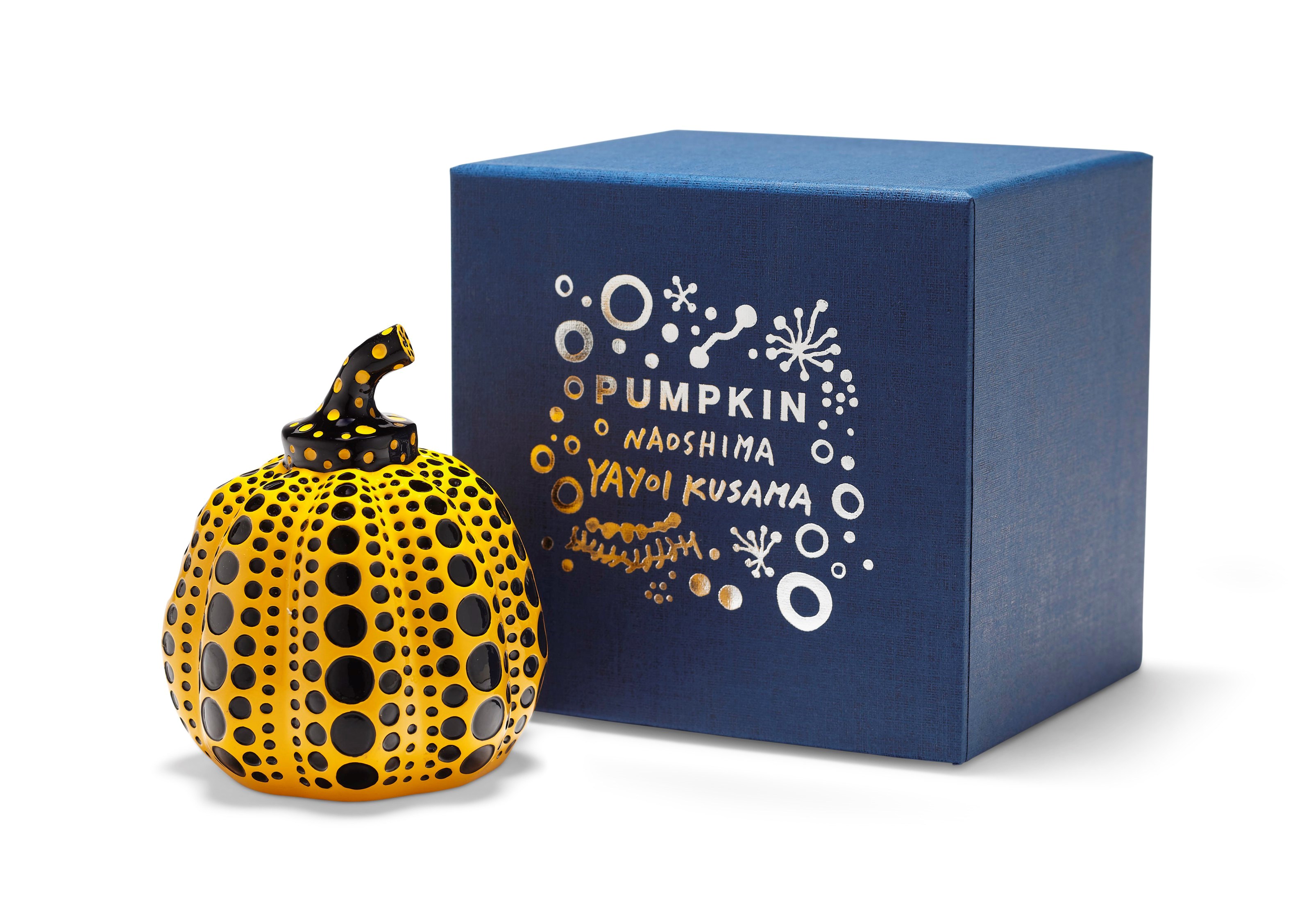
Upon hearing the name “Yayoi Kusama”, two iconic motifs instantaneously call to our minds--polka dots and pumpkins. One of the foremost giants of Japanese contemporary art who has recently been established as the highest-selling living female artist, Yayoi Kusama is celebrated internationally for her multifarious oeuvre. Her signature motif of pumpkins was inspired from her childhood days playing with pumpkins in her family’s seed farm. Kusama began painting two-dimensional works depicting pumpkins since she was a teenage student. Towards the end of the 1950s, Kusama moved to New York City from Kyoto in search of artistic liberation from the traditional conventions of Japanese art. Around the 1990s, Kusama began extensively exploiting the everyday agricultural plant into a personal symbol that became vital to her artistry. The hypnotic polka dot patterns that ornate the pumpkins also stem from her childhood. Kusama explained that she has been haunted by hallucinatory visions and her obsessive neurosis condition, which have heavily influenced her visually mesmerizing, optic works of art. Through her technical finesse and unconventional style, Kusama transcended the norms of Abstract Expressionism and instigated Minimalism as well as Pop art.