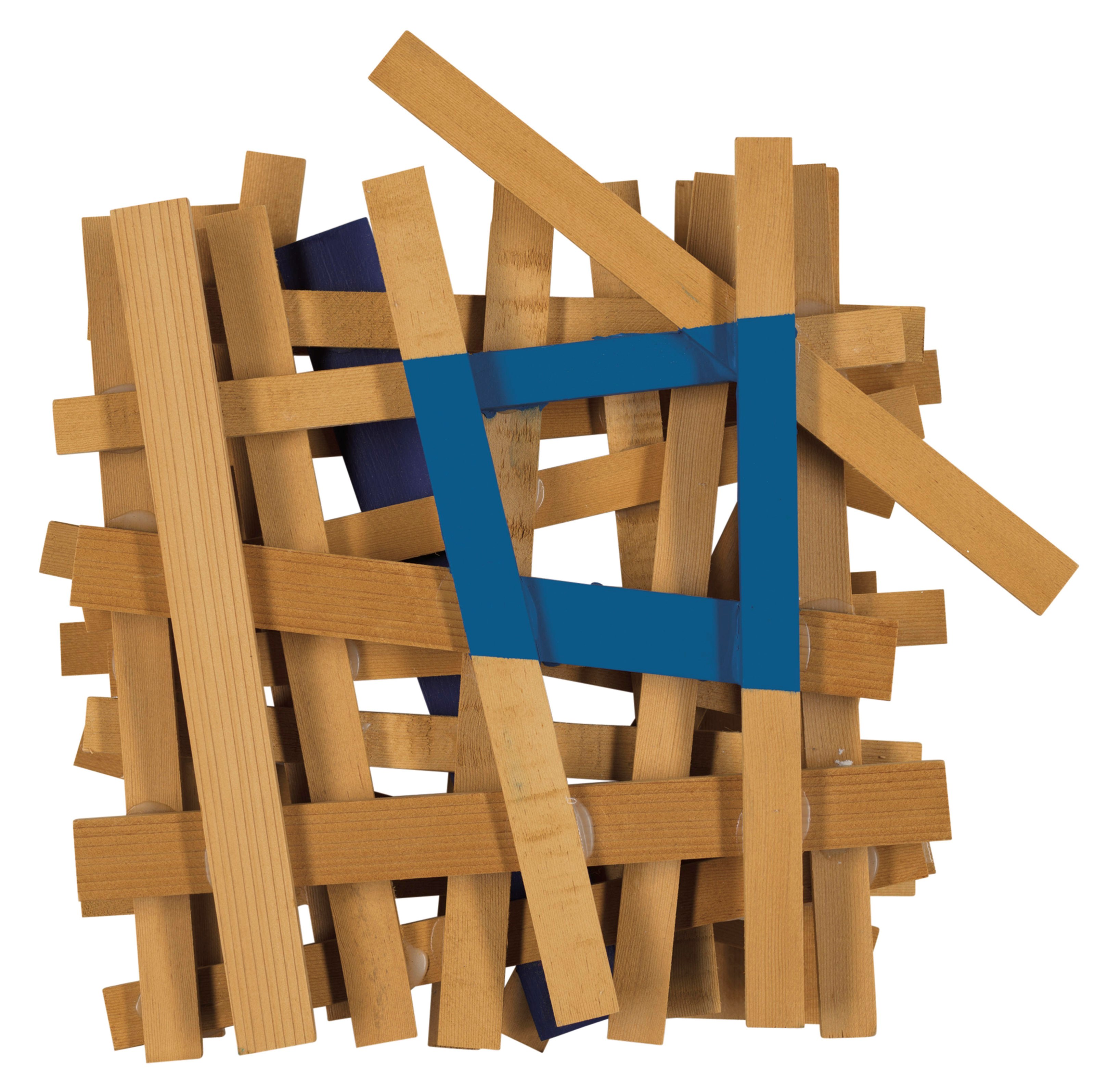
专家说明
Kishio Suga's work best embodies the characteristics of the movement that is generally known as the "Mono-ha" (object) school, and he has maintained these characteristics down to the present day. The Mono-ha movement although had a short duration from 1968 through the early 1970s, had a pivotal effect on Japanese contemporary art.
Challenging pre-existing concept about material and space, Mono-ha artists utilised raw, unworked materials such as bare wood, stone, clay, or water, and sought to draw out an artistic expression by arranging them, often temporarily and with minimal manipulation, within an environment.
Wood is one of the materials Suga commonly uses as a base to examine inter-object relationships in their own existence and with the world itself.
The significance of Suga's work lies in his gradual efforts to bring this kind of interaction with the external world into the realm of art: this interaction with the world itself will form an art.
Kishio Suga is a central figure of Mono-ha, who studied under Yoshishige Saito at Tama Art University, and is acknowledged to be the most disciplined and long-standing adherent of the movement’s concept. His work shows an emphasis on the ‘situation’ over the ‘things’ themselves.