拍品 117THE SANYA COLLECTION
WANG GUANGYI (B.1957)
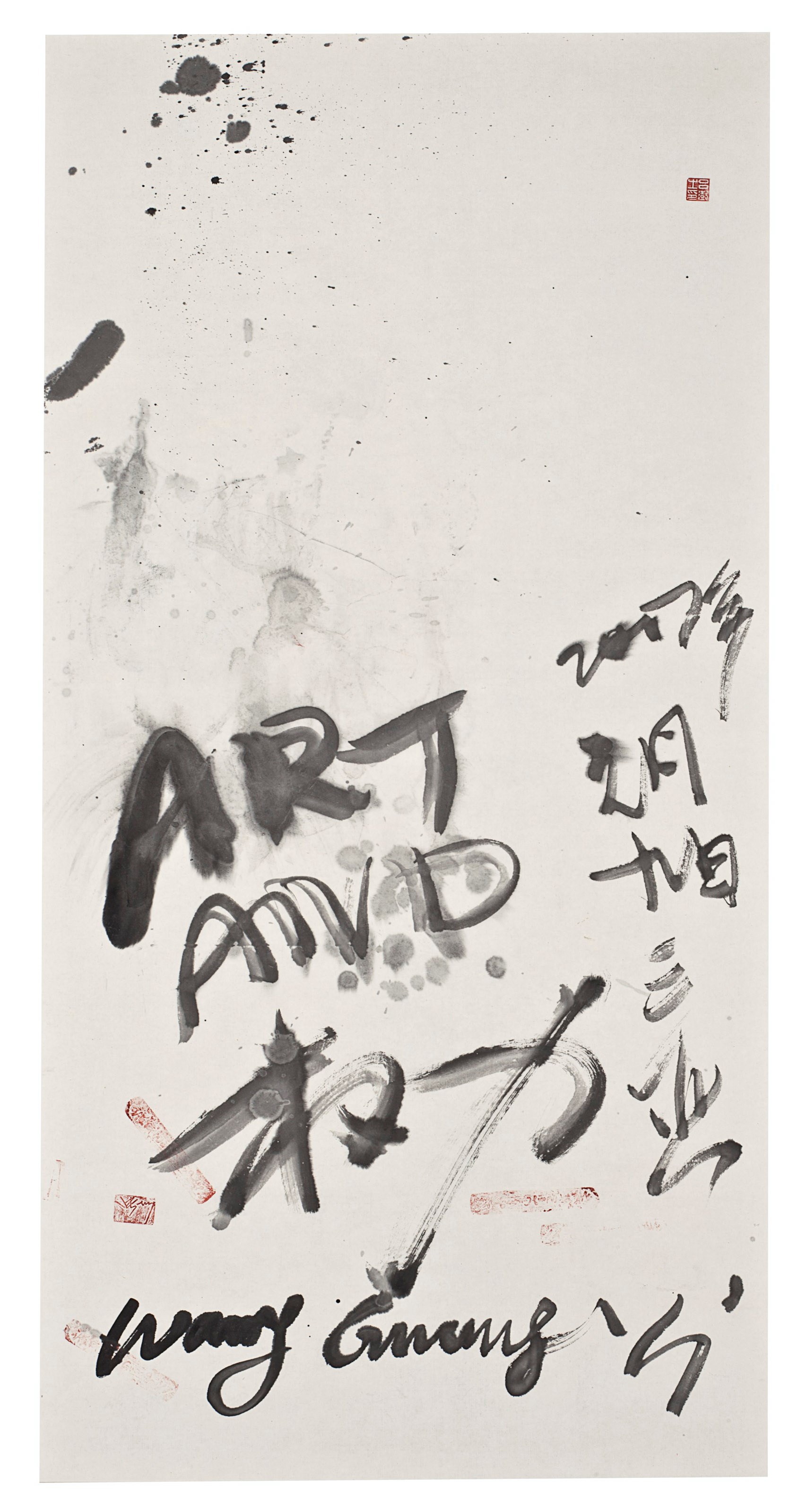
Untitled (Art and Power)
已结束2016年5月13日
成交价
USD 4,750
更多信息
专家说明
In 2007, the art historian and curator Lu Peng invited a group of Chinese contemporary artists including Zeng Fanzhi, Zhang Xiaogang, Zhou Chunya, Ye Yongqing, Yue Minjun, Wang Guangyi, Mao Xuhui, Wu Shanzhuan, and Zhang Peili to gather at a resort of Sanya for a ‘brush event’. The artists were asked to explore traditional medium of ink and color using brush on rice paper in reinterpreting the most recognizable themes and imageries within their oeuvre. Like the Orchid Pavilion gathering organized by Wang Xizhi in the Six Dynasties, the Sanya gathering after 1600 years brought contemporary artists together for mutual inspiration and artist creation, reviving the great literati traditional in the Chinese history.
Wang Guangyi's immediately recognizable Great Criticism paintings have become iconic of the transformation shaping China's social, cultural, and political life in the last several decades. The circumstances of Wang's art are contemporary China— a landscape where two ideologically antithetical systems have collided head-on: consumer capitalism and Chinese communism. But the short-hand focus on political themes under the heading of "Political Pop" obscures the ways in which Wang's deconstructive concerns are also, and have always been, fundamentally aesthetic.
At the Sanya gathering, which provided with only rice paper, ink, and brush, Wang took off his iconic imagery that often observed in his Great Critique Series. Rather, he worked with words in both English and Chinese, referring the Western influence in Modern Chinese, as well as expressing his social critic in a straightforward and disguised way. Meaning “art and power”, the transformed calligraphy does not limit Wang’s ability to deliver a visual attitude, but rather enhances his advocate for an interrogation into essential and universal compositional form. This work is a good example of Wang’s approach to provide a de-politicalized visual vocabulary to move contemporary culture forward.