拍品 69
WANG GUANGYI (B.1957)
Chanel
已结束2016年5月13日
成交价
USD 4,000
更多信息
专家说明
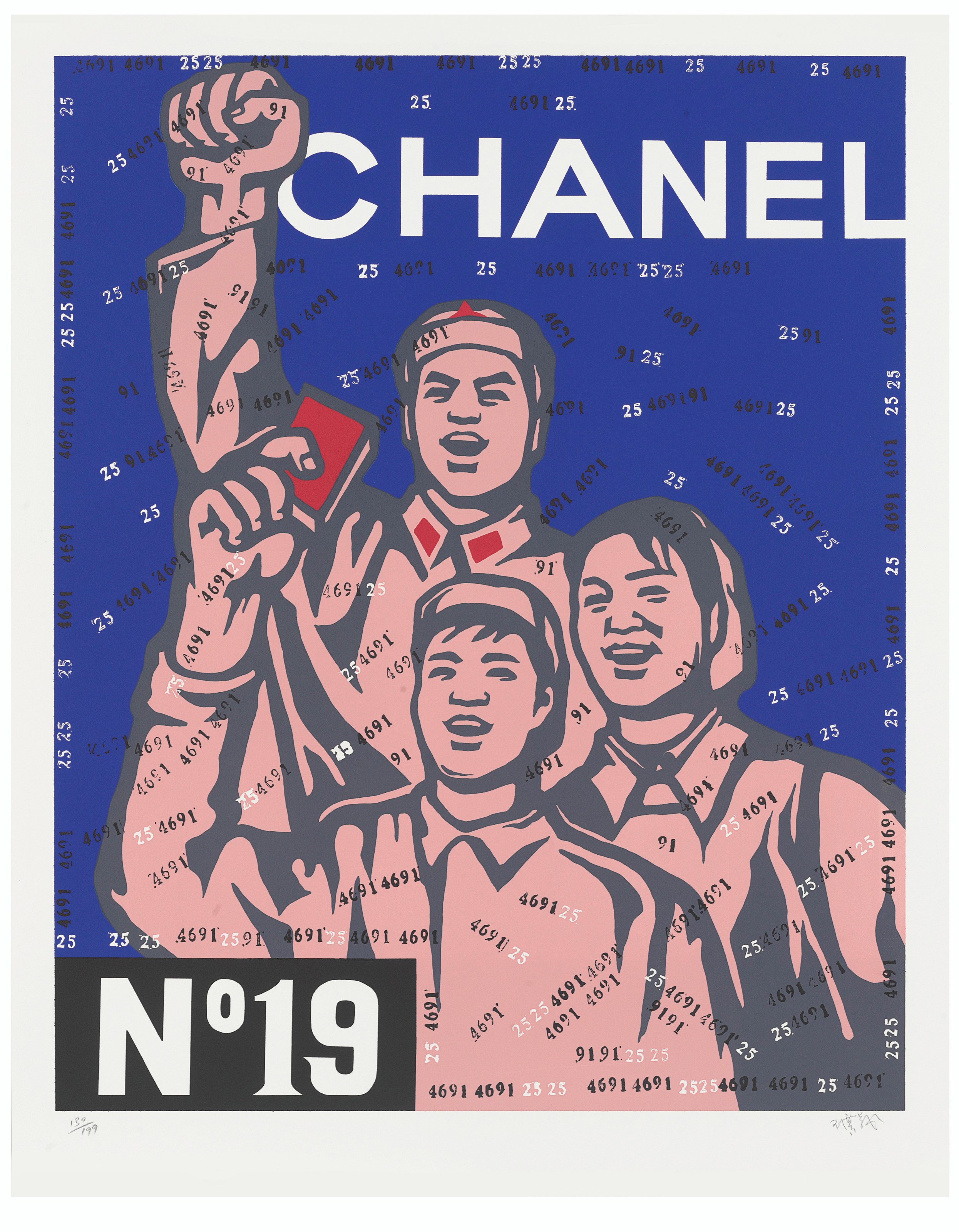
Wang Guangyi is one of the central figures of the Political Pop movement. Best known for his Great Criticism Series, Wang creates links between the propaganda aesthetics of the Cultural Revolution and striking imagery of American Pop, which in turn was inspired by the new levels of commercialism and consumerism penetrating popular culture in the U.S. By doing so, he holds a mirror up to China's present. With a critical attitude towards his home country, he pokes fun at China's modernization efforts and international exchange, viewing both as nothing but commercial greed.
In this work, Wang scrutinizes the dominance of icon-worship of Western brand products. By juxtaposing one of the world's most recognizable brand names and logos with famous compositions borrowed from propaganda posters of the Cultural Revolution, he creates an alliance between the authorities of power which show no sympathy toward China's past and present state. While the vigorous gestures of monumental proletarian images from the Mao era have already revealed themselves as a mendaciously colorful facade of an inhumane machinery, Wang attributes the same hypocrisy to Western consumerism. Wang simultaneously critiques the legacy of communism in China, while also producing a critique of the radical turn towards consumerism evident in the country in the last two decades and the heedless abandonment of ideals in exchange for products.
In this work, Wang scrutinizes the dominance of icon-worship of Western brand products. By juxtaposing one of the world's most recognizable brand names and logos with famous compositions borrowed from propaganda posters of the Cultural Revolution, he creates an alliance between the authorities of power which show no sympathy toward China's past and present state. While the vigorous gestures of monumental proletarian images from the Mao era have already revealed themselves as a mendaciously colorful facade of an inhumane machinery, Wang attributes the same hypocrisy to Western consumerism. Wang simultaneously critiques the legacy of communism in China, while also producing a critique of the radical turn towards consumerism evident in the country in the last two decades and the heedless abandonment of ideals in exchange for products.