专家说明
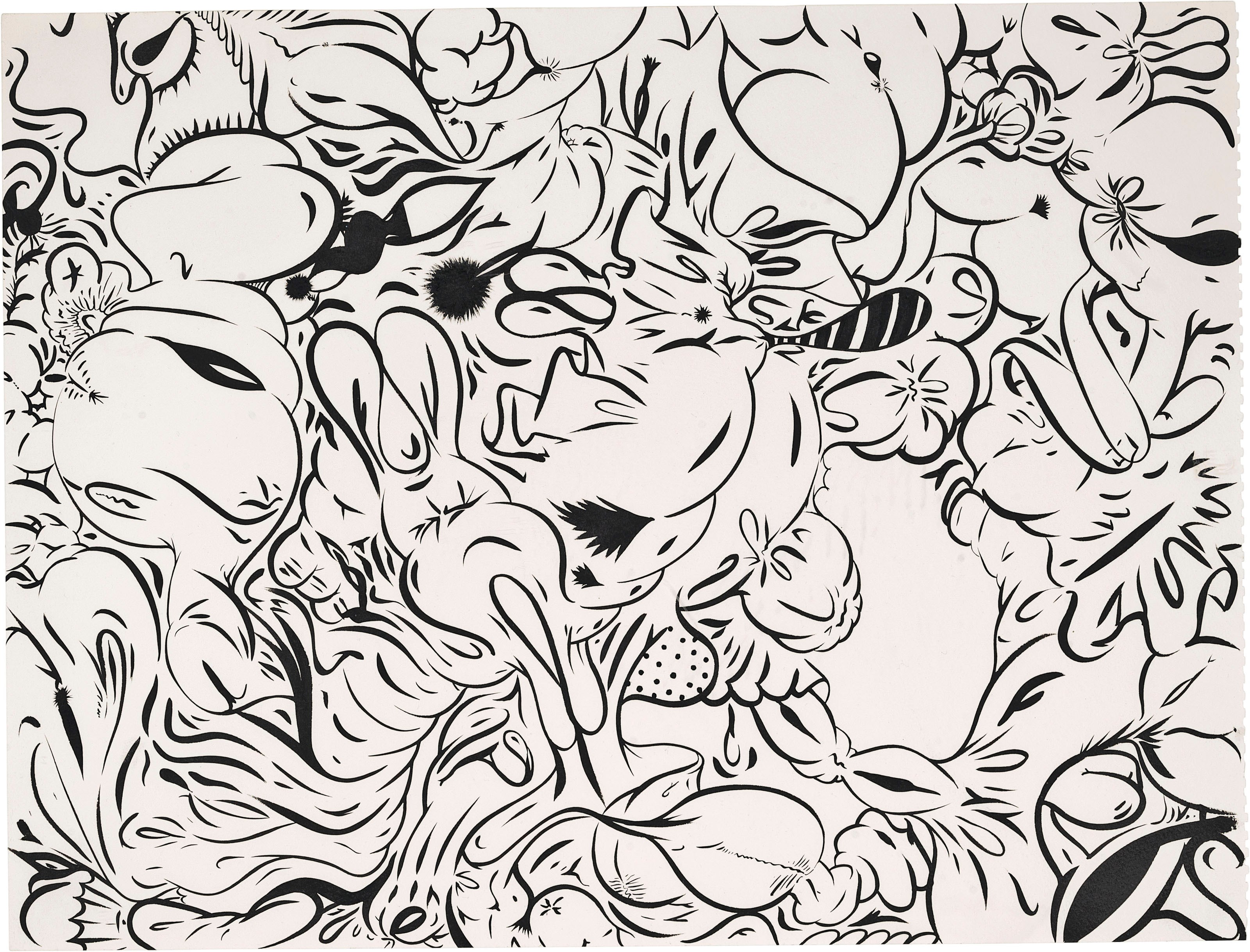
[Sue Williams’] work tends to imply a suspicion of overproduction: a refreshing sentiment to arrive on the heels of the overproduced 80s. The rough texture of her paint, the hasty necessity of her hand, also act as cues to the purpose of her art. This is not painting for decoration. Her stream-of-consciousness drawing style can be as unpainterly as the daily comics, yet she departs significantly from other painters who have used similar, cartoonish forms. While the playful, gestural quality of her caricatures may bear some resemblance, for instance, to cartoon enthusiasts such as Mike Kelley, Raymond Pettibon or even Philip Guston (especially his more harrowing portraits of the Ku Klux Klan), Williams does not extrapolate her forms from exterior social horrors. Her images are directly derived and coextensive with her own experiences. The sites of trauma she presents are not, of course, only unique to the artist, but universalised according to a continuum of common female objectification and abuse - from Manet’s nudes, to popular automobile advertisements…to the caricatures of many of her male art contemporaries’ (L. Cottingham, ‘Painted Bad’, in Frieze, Issue 5, June/August 1992).