Lot 32
GEORGE WESLEY BELLOWS (1882-1925)
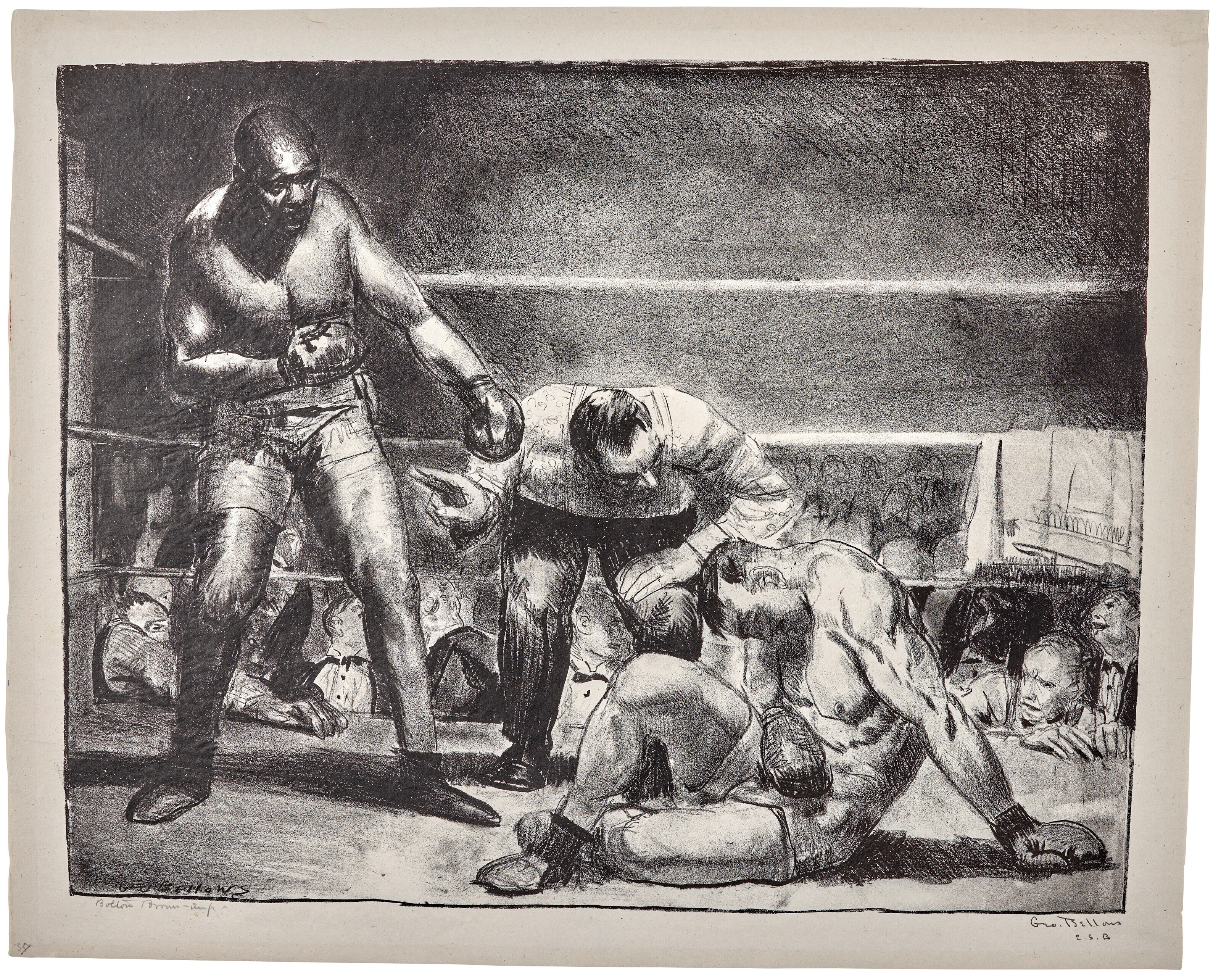
The White Hope
Fermé18 August 2023
Estimation
USD 3,000–5,000
Plus d'informations
Note du spécialiste
One of the greatest boxers of all time, Jack Johnson rose to fame at the height of the Jim Crow era, when segregation and a ban on boxing in the United States thwarted Johnson’s ambitions to become the first black world heavyweight champion. The reigning champion, American boxer Jim Jeffries, retired in 1905 to avoid facing Johnson and risk losing the title. Undeterred, Johnson chased the new champion, Tommy Burns, around the world until he agreed to a fight, but not without a hefty fee. The match was held in Sydney, Australia, where the crowds heavily favored white boxer. But Johnson defeated him handily, taunting Burns and showing off his superior athleticism. Jack Johnson had finally earned his title as world heavyweight champion.
The result sent shockwaves around the world. American journalist Jack London called for a “great white hope” to reclaim the honor of white men and dethrone the new heavyweight champion. Previous world champion Jim Jeffries was called to battle after five years in retirement. In 1910, Johnson defended his title, dominating the match against Jeffries, proving yet again to the world that he surpassed his competitors in strength and skill. The result of the boxing match spurred racially motivated riots across the United States, leaving twenty people dead.
“The poised fighter in this lithograph is Jack Johnson; the enervated ‘white hope’ is Jim Jeffries” (Mason p. 138). Bellows’ sharply ironic image challenges views about white racial superiority prevalent across the United States at the time.