Lot 34
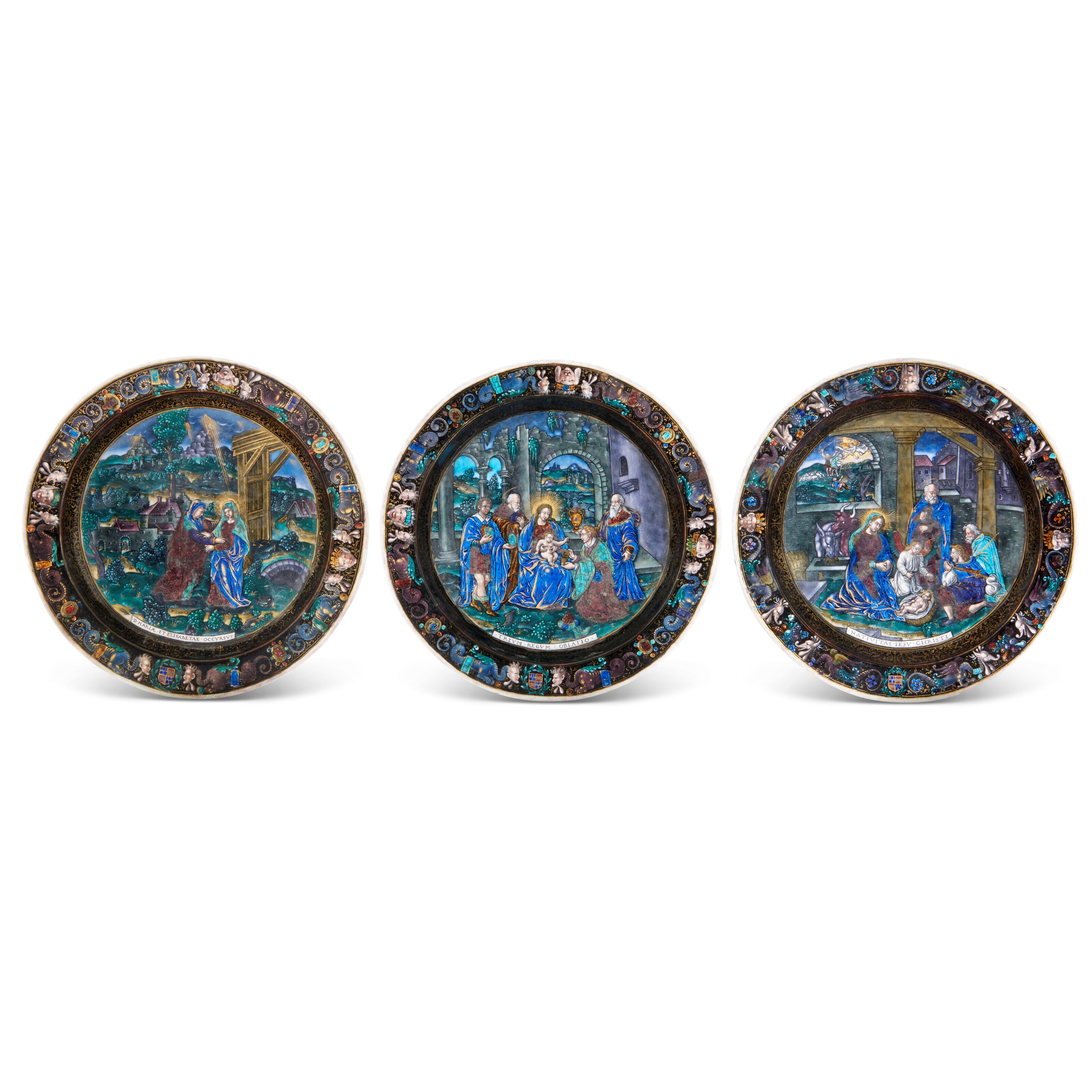
ATTRIBUTED TO JEAN DE COURT, MASTER IC OR JEAN COURTOIS (C.1530-1584), LIMOGES, LATE 16TH CENTURY
The Adoration of the Shepherds, Adoration of the Magi and Visitation
Fermé14 July 2023
Prix réalisé
GBP 189,000
Plus d'informations
Note du spécialiste
The coat of arms on each plate are those of the de Vic family, who were originally from Guyenne, and may indicate that they were originally commissioned by Méry de Vic, president of the parliament of Toulouse in 1597 (Descheemaeker, op. cit., pp. 94-95). The present lot represents three of a series of plates from the same service which are still extant, including an example in the Hermitage, St. Petersburg, and five in the Grünes Gewölbe Museum in Dresden.
Enamels signed with the initials ‘IC’ have previously been associated with the artist Jean de Court. However, as Sophie Baratte has pointed out in her discussion of enamels signed 'ICDV', 'IC' and 'IDC' (op. cit., p. 317), the range of styles and palettes within this group suggests that they represent not individual artists, but a series of - likely interconnected - workshops that were producing enamels over a number of decades in the later 16th and early 17th centuries.
Enamels signed with the initials ‘IC’ have previously been associated with the artist Jean de Court. However, as Sophie Baratte has pointed out in her discussion of enamels signed 'ICDV', 'IC' and 'IDC' (op. cit., p. 317), the range of styles and palettes within this group suggests that they represent not individual artists, but a series of - likely interconnected - workshops that were producing enamels over a number of decades in the later 16th and early 17th centuries.