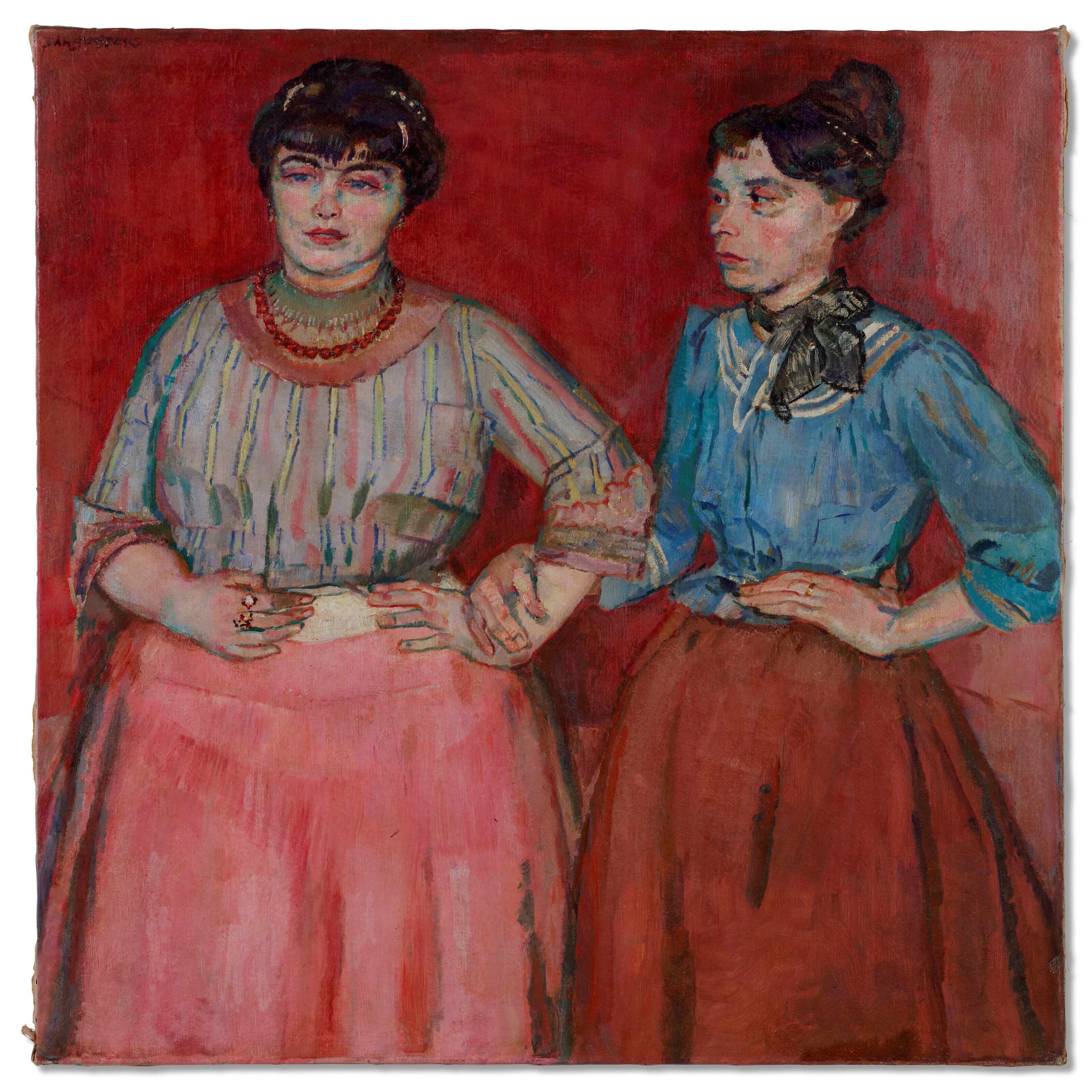
Lot 9PROPERTY FROM HEIRS OF BERTHA MEIJER, THE HAGUE
JAN SLUIJTERS (1881-1957)
Twee vrouwen uit de Jordaan (Two women from the Jordaan)
Fermé5 October 2022
Prix réalisé
EUR 47,880
Plus d'informations
Note du spécialiste
Jan Sluijters, a pioneer of Post-Impressionism in the Netherlands, was always on a quest to discover and experiment with new ways of painting. During a stay in Paris in 1906—where he studied with a scholarship after winning the prestigious Prix de Rome in 1904—Sluijters’ art changed radically. He started to combine new techniques with his previously more academic style. He was captivated by the methods of the Neo-Impressionists and Fauvists, and specifically by the paintings of Kees van Dongen, who had permanently settled in the French capital in 1900, where he had become one of the pioneers of the Fauvist movement.
Later that year, Jan Sluijters returned to Amsterdam. During his painterly career Sluijters painted many still lifes, nudes and portraits, but the city always endured as one of his main inspirations. He was fascinated with its rapid urbanisation, and charmed by places where old and new developments came together. His subject matter—if not his style—was therefore closely related to the Amsterdam impressionists, such as Isaac Israels and George Hendrik Breitner, a generation before him.
From 1911 to August 1913, Sluijters lived with his wife Greet on the Bloemgracht in De Jordaan district. De Jordaan was a typical working-class neighbourhood, where many craftsmen and small businesses were based. From the second half of the 19th century, the population had increased and there was a shortage of affordable housing for poor people. The area became overcrowded and impoverished and daily life took place mainly on the streets. Like other artists such as Piet van der Hem and Kees Maks, Jan Sluijters became inspired by the raw street life in the neighbourhood: in his paintings of this period, the ruthless observational naturalism that never really left Sluijters returns in full force.
In the present work Sluijters has painted his models with respect and humour. The two working-class women with their coloured skirts are placed monumentally in the composition. From the way they are dressed and wearing jewellery, they likely posed for the painter in their best clothes for a special occasion. Sluijters’ predilection for depicting natural, unpolished characters—traditionally often denied painterly attention—is a constant in his work. Whether they were working-class women, prostitutes, wrestlers, boxers or gypsies, Sluijters loved to paint them. These portraits are generally more lively and painted with more expression and psychological depth than many of his ‘commissioned portraits’ from later years.