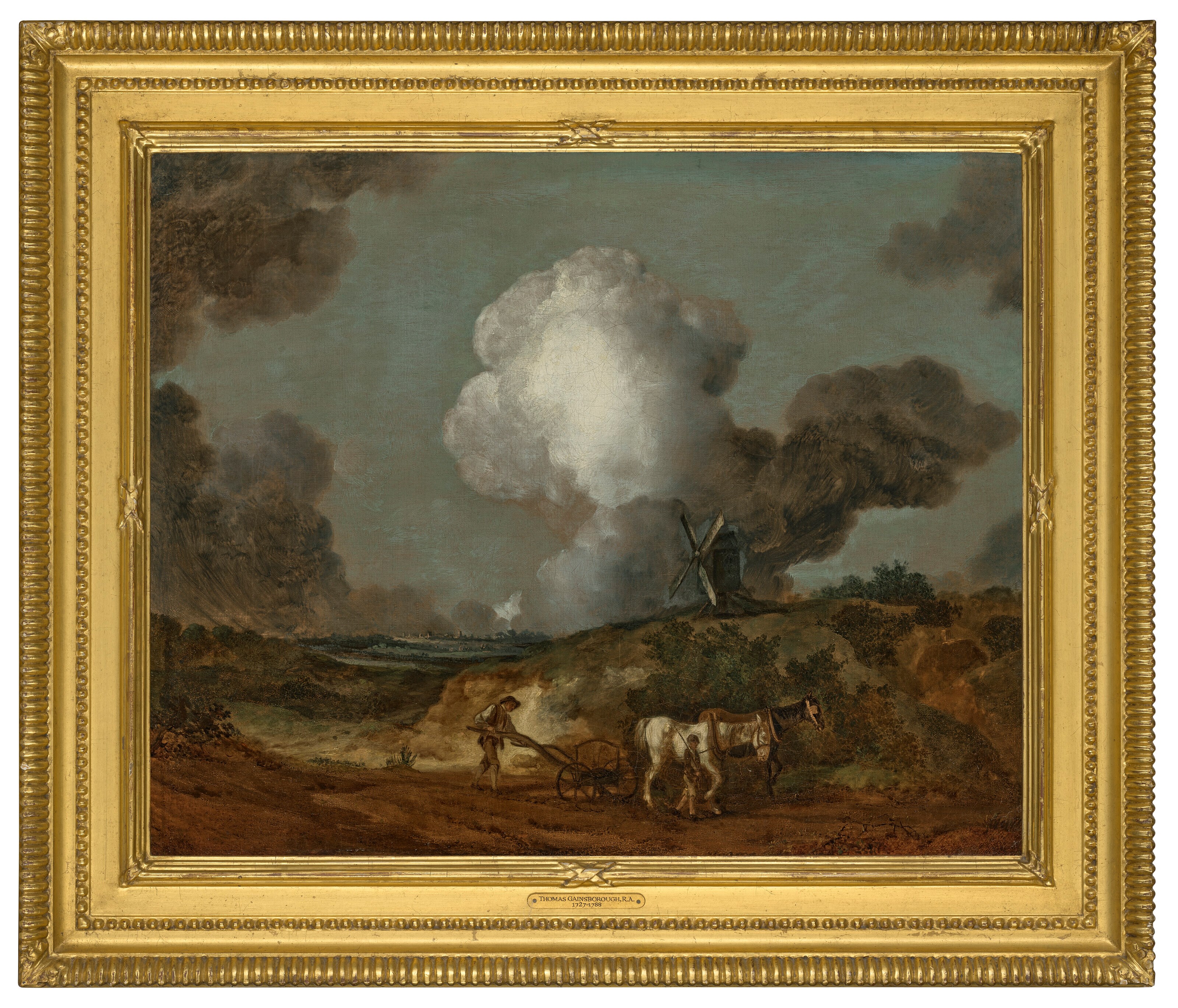
Lot 209
THOMAS GAINSBOROUGH, R.A. (SUDBURY 1727-1788 LONDON)
The Suffolk Plough
Fermé8 July 2022
Estimation
GBP 50,000–80,000
Plus d'informations
Note du spécialiste
This atmospheric canvas entitled The Suffolk Plough - the name the artist himself gave to the picture - is a fine example of what Roger Fry described as 'a transposition of a Dutch landscape into an English mood, and with a freshness and delicacy of feeling which is entirely personal to Gainsborough' (Reflections on British Painting, London, 1934, p. 72).
John Hayes, who dated the picture to circa 1753-54 (op. cit., 1982), shortly after the artist moved to Ipswich, observed that this work was 'clearly one Gainsborough regarded as of significance in his output to date'. It is one of only two compositions that Gainsborough etched himself, the other being The Gypsies of circa 1758, formerly in the collection of Thomas, 1st Earl of Lichfield, and now untraced. Hayes notes the 'sophistication of the rococo composition' (ibid.), with its sinuous winding track partly echoing and simultaneously continuing the contour of the bank. The central figure of the ploughman and the windmill on top of the hill were favourite motifs of Gainsborough's at this point in his career and are evidence of the artist's well documented admiration for Dutch seventeenth century landscape painters such as Jacob van Ruisdael and Jan Wynants, whose works the artist would have studied due to their increasing popularity with English collectors in the eighteenth century.
The subject was evidently a popular one as Gainsborough had painted an earlier and less sophisticated version (Hayes, op. cit., no. 36), of which several copies by other artists exist.