Lot 100
ANTHONY VANDYKE COPLEY FIELDING, P.O.W.S. (SOWERBY BRIDGE 1778-1855 WORTHING)
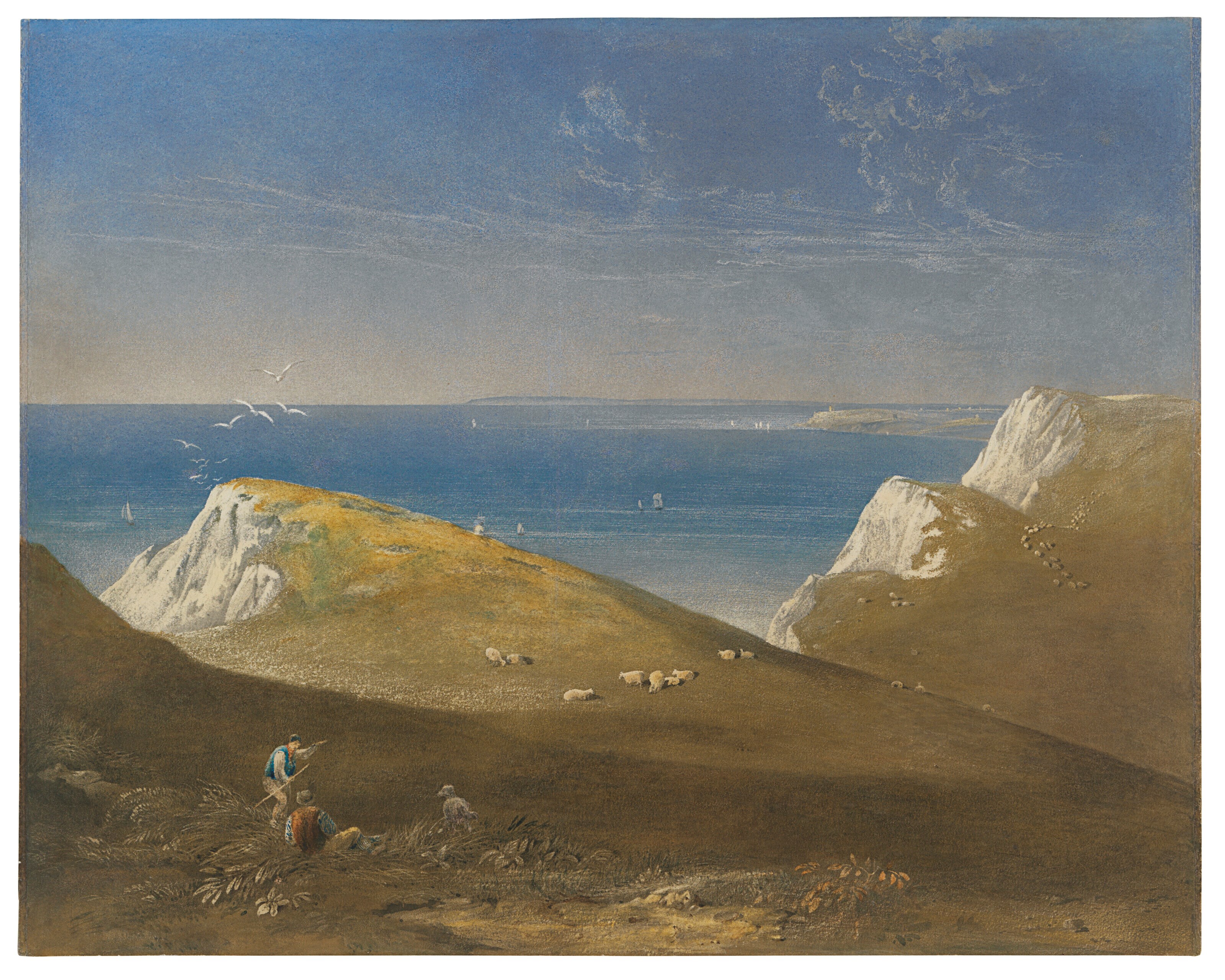
Shakespeare's Cliff, Dover
Fermé24 March 2022
Prix réalisé
GBP 11,970
Plus d'informations
Note du spécialiste
Anthony Vandyke Copley Fielding was one of the most successful members of the Society of Painters in Water Colours in the first half of the 19th century. He exhibited 1748 watercolours over his career, and was a favourite of both collectors and the wider public. Having spent some of his teenage years in Ambleside, Fielding came to London in 1809, where he came under the wing of John Varley, who gave him informal instruction and supported his election as an associate of the Society of Painters in Water Colours in 1810.
In 1808 Fielding made the first of several tours of North Wales, and returned to the Lake District regularly to visit his brother, Theodore, who settled there. However, his subject matter went beyond the usual picturesque locations, including marine subjects, and views of the South Downs and the cliffs of the south coast. Due to the ill health of his daughter he settled at Sandgate in 1817, later moving to Brighton and Worthing, and the features of the south coast provided particular inspiration, as demonstrated in this dramatic drawing.
Shakespeare’s Cliff, to the west of Dover, was less than ten miles from Fielding’s home at Sandgate, and he must have known the dramatic landscape well. Exhibited at the R.W.S. in 1846, this watercolour is a perfect demonstration of Fielding’s skill as a watercolourist, with its bold light and shadow, and his strong, confident use of scratching out.