Lot 116PROPERTY OF A PRIVATE COLLECTOR
AFTER CHARLES LEBRUN (FRENCH, 1619-1690) AND FRANÇOIS GIRARDON (FRENCH, 1628-1715)
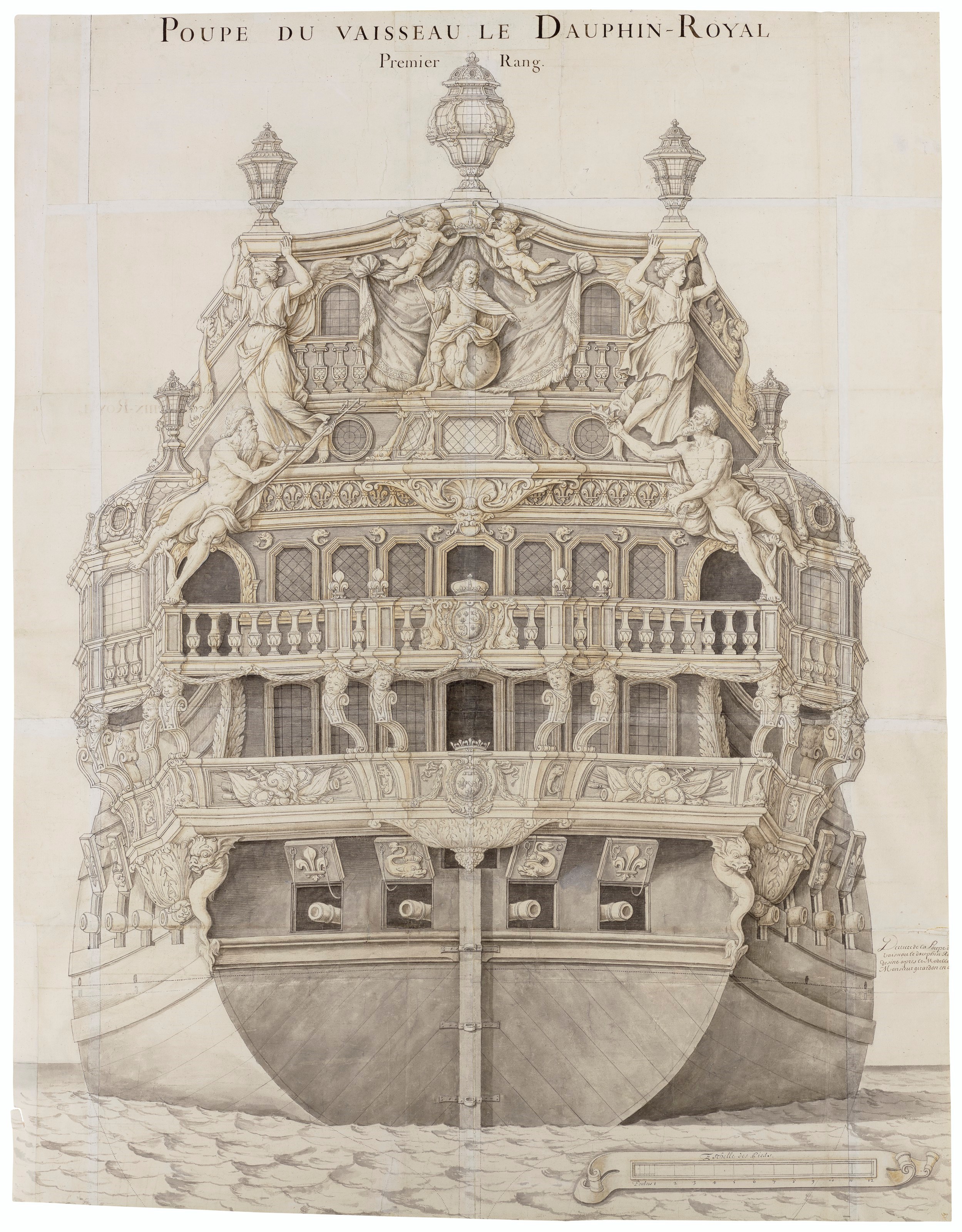
Design for the decoration of the three-quarter gallery of the Dauphin-Royal
Fermé20 October 2021
Prix réalisé
USD 30,000
Plus d'informations
Note du spécialiste
In 1668, under Louis XIV (1661-1715), the painter Charles Le Brun and the sculptor François Girardon, together with the latter’s pupil Pierre Turreau (1638-1676) are sent to the port city of Toulon to work on the designs for the sculpted decoration and execution of the 100-gun ship the Dauphin Royal (Fuhring, op. cit., p. 444). As this design for the stern of the ship attests, Le Brun and Girardon proposed an abundant decoration in relief and in the round. At center of the design, the Dauphin (literally ‘dolphin’, but meaning the crown prince) is seen seated; he is flanked by Neptune and possibly a river God, who offer crowns. The drawing in lot 27 is a design for one of the sides, or ‘bouteilles’, of the same ship of which the stern is depicted in this lot, and more precisely the side where the general headquarters were lodged. Following the recommendation of minister Jean-Baptiste Colbert, no effort or expense was spared to ‘make shine the magnificence of His Majesty at sea’ (‘esclatter sur mer, la magnificence de sa Majesté’; quoted in Théron, op. cit., p. 46).
The drawings offered here appear to be period repetitions after the original drawings, which presumably are lost. The sculptors involved in the decoration of these ships often moved from port to port and would take with them accurate records of the designs they had worked on. Other repetitions were meant for official approval, and the inscription on the sheets under discussion may indicate they were the versions sent to Versailles in October 1669. Later in the century, responding to the necessity of war ships to become more agile, Colbert ordered the decoration to become lighter. The two works offered here, impressive in detail as well as in size, bear witness to the heyday of French naval decoration preceding this new period of simpler designs.
The drawings offered here appear to be period repetitions after the original drawings, which presumably are lost. The sculptors involved in the decoration of these ships often moved from port to port and would take with them accurate records of the designs they had worked on. Other repetitions were meant for official approval, and the inscription on the sheets under discussion may indicate they were the versions sent to Versailles in October 1669. Later in the century, responding to the necessity of war ships to become more agile, Colbert ordered the decoration to become lighter. The two works offered here, impressive in detail as well as in size, bear witness to the heyday of French naval decoration preceding this new period of simpler designs.