Lot 197
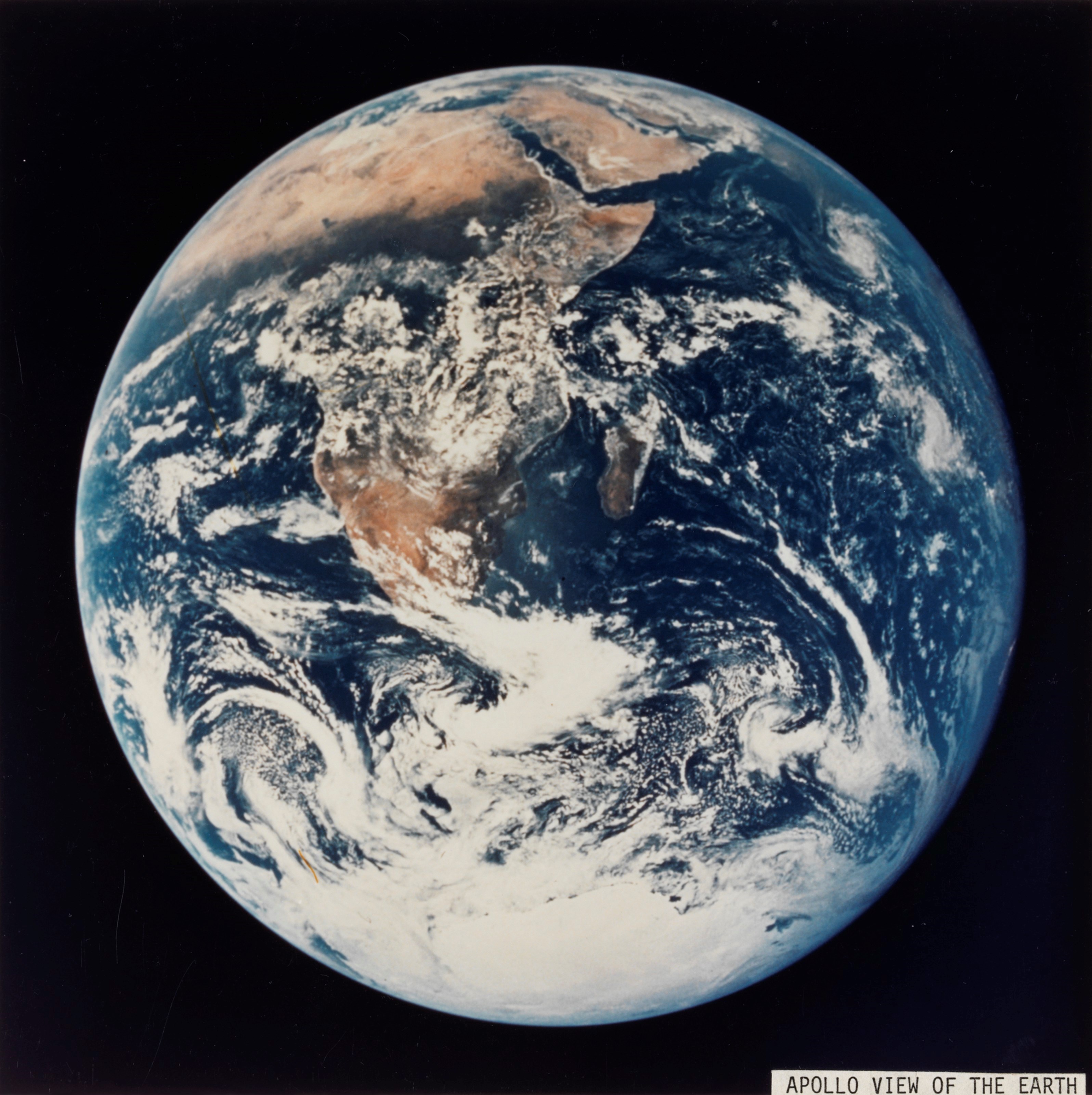
Two versions of the “Blue Marble”, the first photograph of the full Earth seen by human eyes, December 7-19, 1972
Harrison Schmitt; Ronald Evans [Apollo 17]
Fermé28 April 2021
Prix réalisé
GBP 3,750
Plus d'informations
Note du spécialiste
Only this final Apollo mission saw the Earth fully illuminated.
This iconic photograph taken through the 80mm lens from a distance of about 30,000 km was credited to Schmitt who took most of the photographs of the Earth on the way to the Moon but there is a possibility that Ron Evans took it. All Apollo flights were heavily scheduled down to the minute. At the time this photo was taken, none of the astronauts was scheduled to do so. Thus this photograph was taken quickly in a stolen moment.
The photograph was released by NASA on Christmas Eve, four years to the day after the Apollo 8 Earthrise, and the image soon became known as the “Blue Marble,” probably the most widely distributed image in history. Noteworthy NASA photo editors cropped the black sky of space to make the Earth appear bigger than originally captured on film by the astronauts. The popularity of this image saw it reproduced long after the time of the 1972 Apollo 17 mission. The present two photographs bear the longer 'This Paper Manufactured By Kodak', denoting that it was printed post-1972.