Lot 3
LYNETTE YIADOM-BOAKYE (B. 1977)
Liberation Two-Piece
Fermé30 July 2020
Prix réalisé
GBP 371,250
Plus d'informations
Note du spécialiste
Lynette Yiadom-Boakye’s works abound with art-historical echoes. They have the gravity and grace of society portraits by John Singer Sargent; their shadows play with the chiaroscuro drama of Goya and Caravaggio; the loosely-worked yet intense presence of her figures, often emerging from unadorned pictorial space, recalls the alla prima directness of Édouard Manet. Indeed, like Manet, Yiadom-Boakye works swiftly, completing each of her paintings in a single day. She depicts not real subjects but composites: dreamlike characters removed from space and time into the unique space of painting, and loaded with enigmatic hints at wider stories beyond what we can see.
As Zadie Smith has written, ‘Yiadom-Boakye is doing more than exploring the supposedly uncharted territory of black selfhood, or making – in that hackneyed phrase – the invisible visible. (Black selfhood has always existed and is not invisible to black people.) Nor are these paintings solely concerned with inserting the black figure into an overwhelmingly white canon … The strongest paintings pursue an entirely different relation: not the narrow point-for-point argument between artist and art history but the essential, living communication between art work and viewer, a relationship that Yiadom-Boakye reminds us is indeed vicarious, voyeuristic, ambivalent, and fundamentally uncontrollable’ (Z. Smith, ‘Lynette Yiadom-Boakye’s Imaginary Portraits,’ The New Yorker, 19 June 2017).
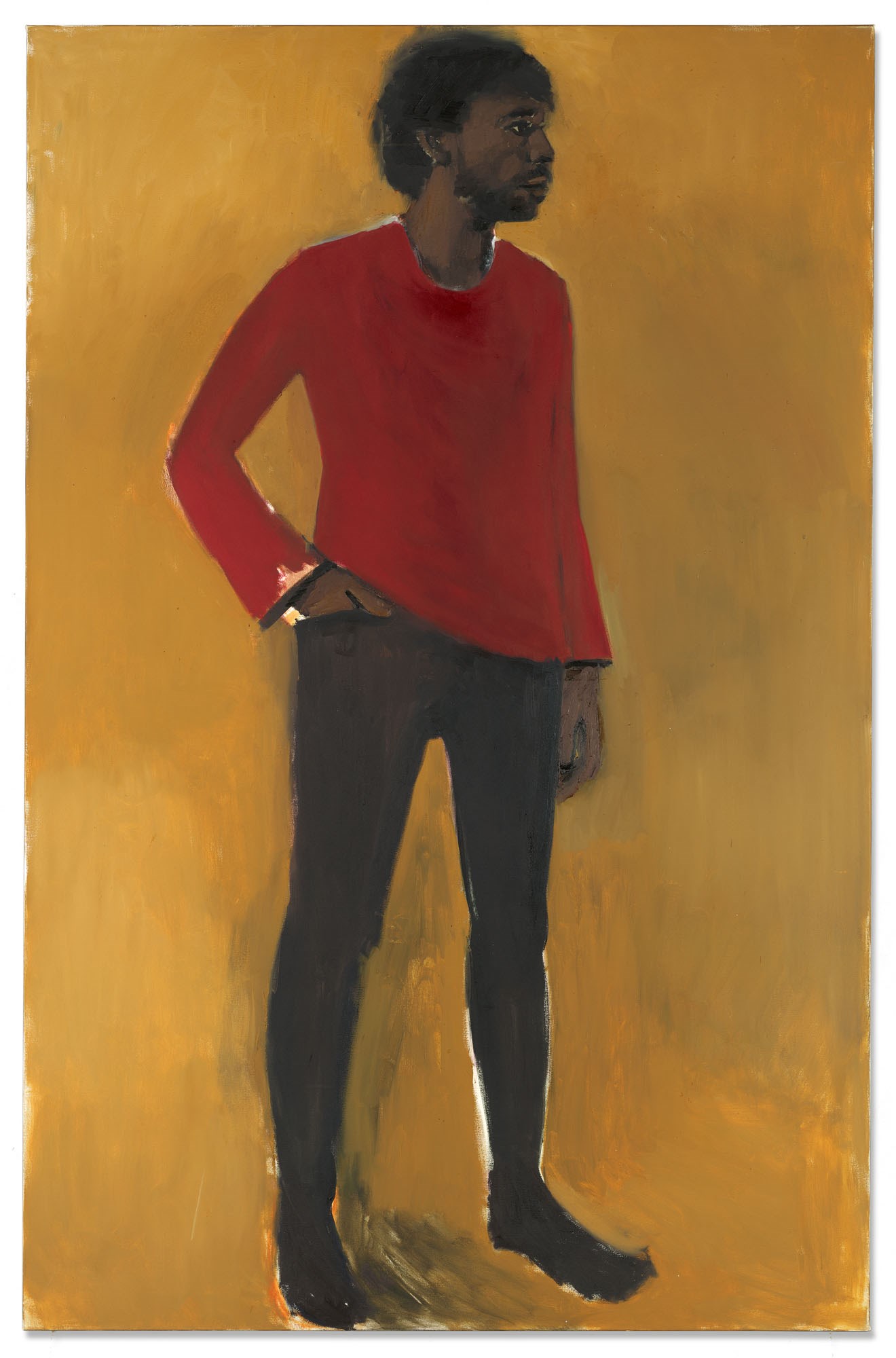
Painted in 2013, the year that Yiadom-Boakye was nominated for the Turner Prize, Liberation Two-Piece exemplifies the artist’s deft Old Masterly touch. An elegant male figure, wearing a red tunic top and leggings that lend him the aspect of a dancer or stage actor, stands in a shimmering space of fluid, golden brushstrokes. He gazes thoughtfully off to the side, perhaps at action taking place outside the picture, or perhaps lost in his own interior world. Yiadom-Boakye writes short stories as well as painting, and inflects her art with a certain literary intrigue: Liberation Two-Piece is open rather than closed, and alive with a magical sense of narrative that remains tantalisingly untold.