Lot 21
Abraham Janssens (Antwerp c. 1575-1632)
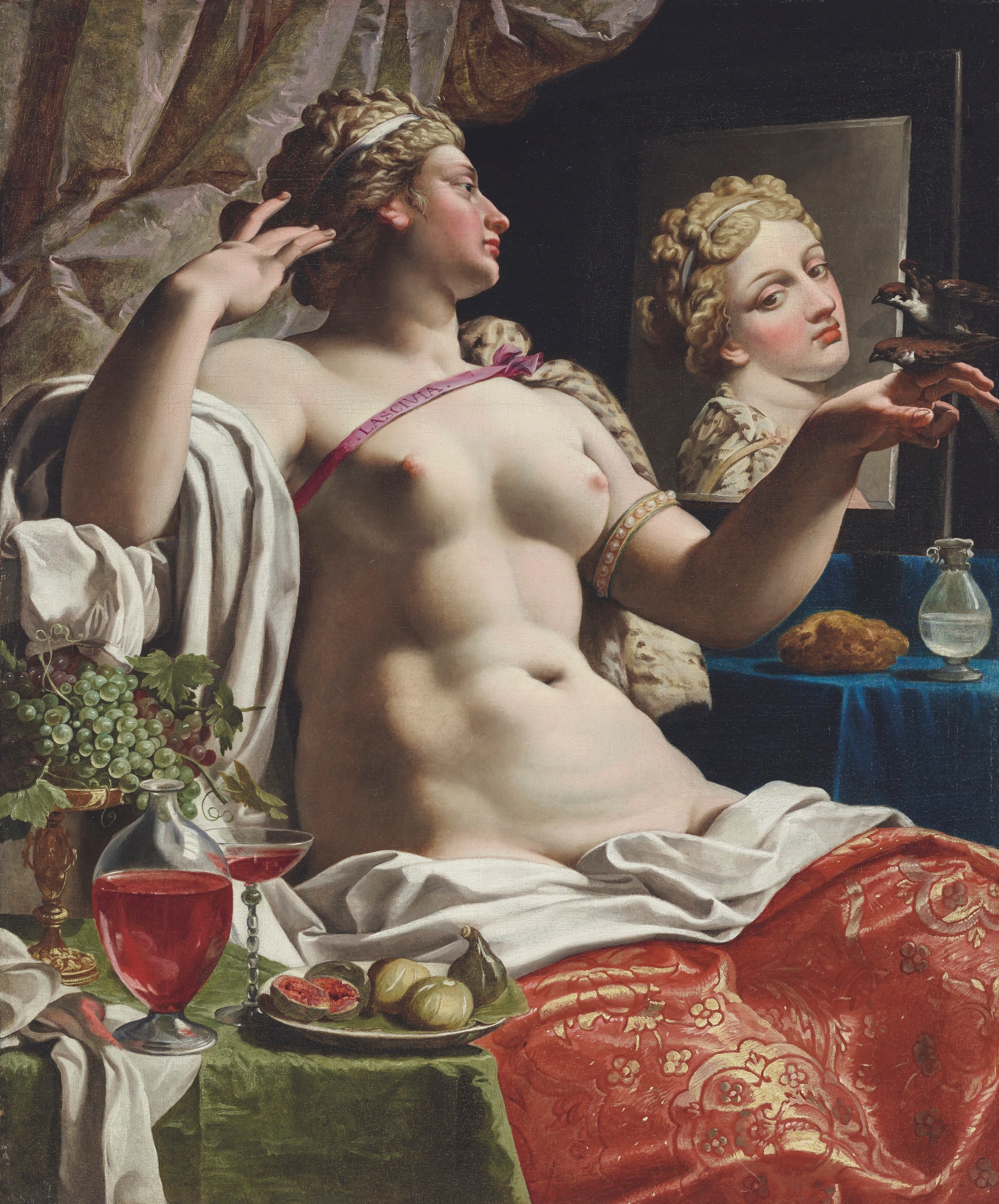
An Allegory of Lust (Lascivia)
Fermé12 June 2020
Prix réalisé
USD 137,500
Plus d'informations
Note du spécialiste
Abraham Janssens was Sir Peter Paul Rubens' leading rival in Antwerp in the first third of the seventeenth century. Datable to circa 1618 on account of stylistic similarities with Janssens’ Diana and Nymphs (Museumslandschaft Hessen Kassel, Gemäldegalerie Alte Meister, Kassel) and Olympus (Bayerische Staatsgemäldesammlung, Alte Pinakothek, Munich), this painting is an exceptional example of the artist’s classicizing tendencies following his departure from the Caravaggesque tenebrism which had characterized his earlier work. An autograph repetition of this painting which lacks the exquisite still life elements in the lower left foreground as well as the glass and bread beneath the mirror is in the Musée Royaux des Beaux-Arts, Brussels.
This composition seamlessly merges two divergent tendencies in Janssens’ art. The monumental, solid figure likely derives from the classical and Renaissance sculpture that Janssens had encountered while resident in Rome between 1598 and 1601, chief among them the works of Michelangelo. By contrast, the still life elements display the influence of local Antwerp painters like Osias Beert, Jacob van Hulsdonck and Frans Snyders. Much like his Italian predecessors, who frequently produced personifications of virtues and vices, Janssens here takes as his subject Lust (Lascivia), emblazoning her name on the strap of her mantle. To further the narrative, the seductive young woman is depicted gazing at herself in the mirror, a traditional symbol of vanity, while two copulating sparrows perch on her left hand.
This composition seamlessly merges two divergent tendencies in Janssens’ art. The monumental, solid figure likely derives from the classical and Renaissance sculpture that Janssens had encountered while resident in Rome between 1598 and 1601, chief among them the works of Michelangelo. By contrast, the still life elements display the influence of local Antwerp painters like Osias Beert, Jacob van Hulsdonck and Frans Snyders. Much like his Italian predecessors, who frequently produced personifications of virtues and vices, Janssens here takes as his subject Lust (Lascivia), emblazoning her name on the strap of her mantle. To further the narrative, the seductive young woman is depicted gazing at herself in the mirror, a traditional symbol of vanity, while two copulating sparrows perch on her left hand.