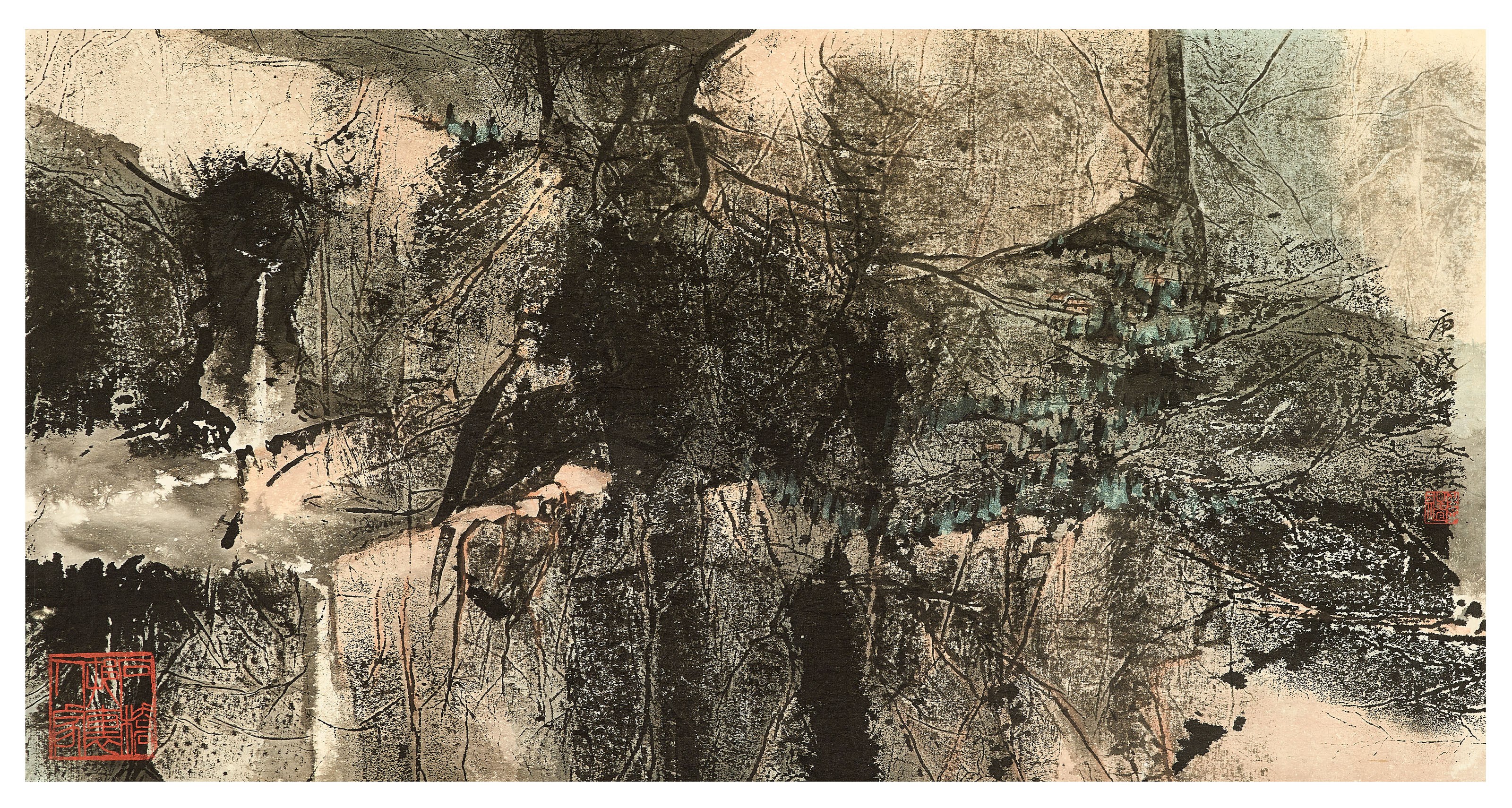
C. C. WANG (WANG JIQIAN, 1907-2003)
Landscape
Hanging scroll, ink and colour on paper
29 x 56.2 cm. (11 3/8 x 22 1/8 in.)
Inscribed and signed, with two seals of the artist
Dated tenth month, gengxu year (1970)
Titleslip inscribed by the artist
PROVENANCE:
Red Rock Studio Collection
SPECIALIST’S NOTES:
Born in Jiangsu Province in 1907, C. C. Wang was one of the most acclaimed Chinese painting collectors of the 20th century as well as a talented artist and art critic. He studied under Suzhou painter Gu Linshi and later Wu Hufan. In the 1940s, Wang immigrated to the United States and began to study Western painting at the Art Students’ League in New York.
Wang excelled in classical painting but his skill and knowledge did not hinder his success in breaking boundaries to become a contemporary ink artist. His landscape paintings create an air of awakened senses which embody techniques from both Western and Eastern artistic traditions. Wang desaturated the hue of his sceneries to an abstract impression; however his depiction of manmade structures such as houses grasp the sensibility of the viewers to come back to the reality he depicted.