Lot 40NEXT CHAPTER: CONTEMPORARY ART FROM A PRIVATE ITALIAN COLLECTION
Tacita Dean (b. 1965)
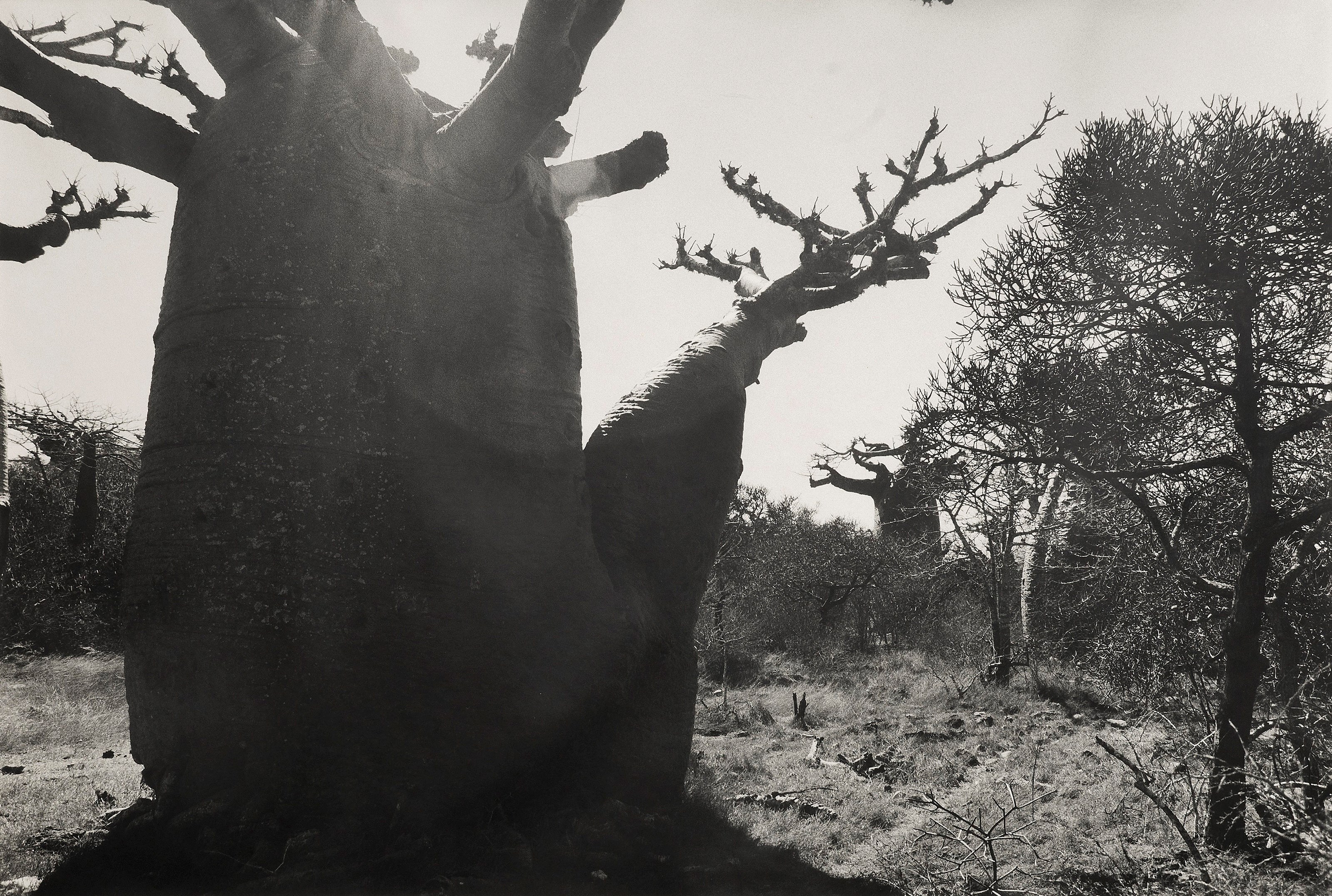
Baobab II
Fermé14 March 2017
Prix réalisé
GBP 2,125
Plus d'informations
Note du spécialiste
Travelling to Madagascar in order to film a total solar eclipse (a project that resulted in her work Diamond Ring, 2002), Tacita Dean became fascinated with the island’s imposing natural forms – specifically the Adansonia trees, commonly known as baobabs. Filming these static trees in elegant black-and-white, the artist juxtaposes close-ups of the baobabs’ highly textured bark, with distant shots of their colossal forms silhouetted against the sky.
Describing the trees like people inhabiting the African plain, Dean has commented: ‘they stand about, frozen in animated posture, hands on hips, arms to the sky, bending one closer to the other to hear its talk … they appeared lost from their prehistoric kinfolk, turned to a breathing stillness’. Inevitably inspired by anthropomorphic myths that associate the bulbous trunks with tales of mischievous ancestors who are forced to grow upside-down within their forms, Dean leads the viewers’ eye to their distinctive shapes in her photographs.
Combining legends from the Baobab’s exotic birthplaces with familiar stories from the artist’s own childhood, in particular Le Petit Prince (1943) by Antoine de Saint-Exupéry, Tacita Dean drenches her works with literary connotations. In the renowned Le Petit Prince the tree is connected to the allegory of the transition between childhood and adolescence. The small planet where the Little Prince lives is full of ginormous baobabs that threaten to engulf so he must continually uproot the new shoots before they grow too large to be removed. Thus, the tree becomes a symbol for problems that are best dealt with immediately, rather than being left to develop into something greater. Leaving the viewer to create their own interpretations from the series of stills produced from her film of the baobabs, Tacita Dean pays homage to their enduring qualities and imposing natural architecture.
‘They are grand, and proud, and supremely special, merely stranded for an eternity, amongst the flies and the grass and the indifferent cattle’ T. Dean.